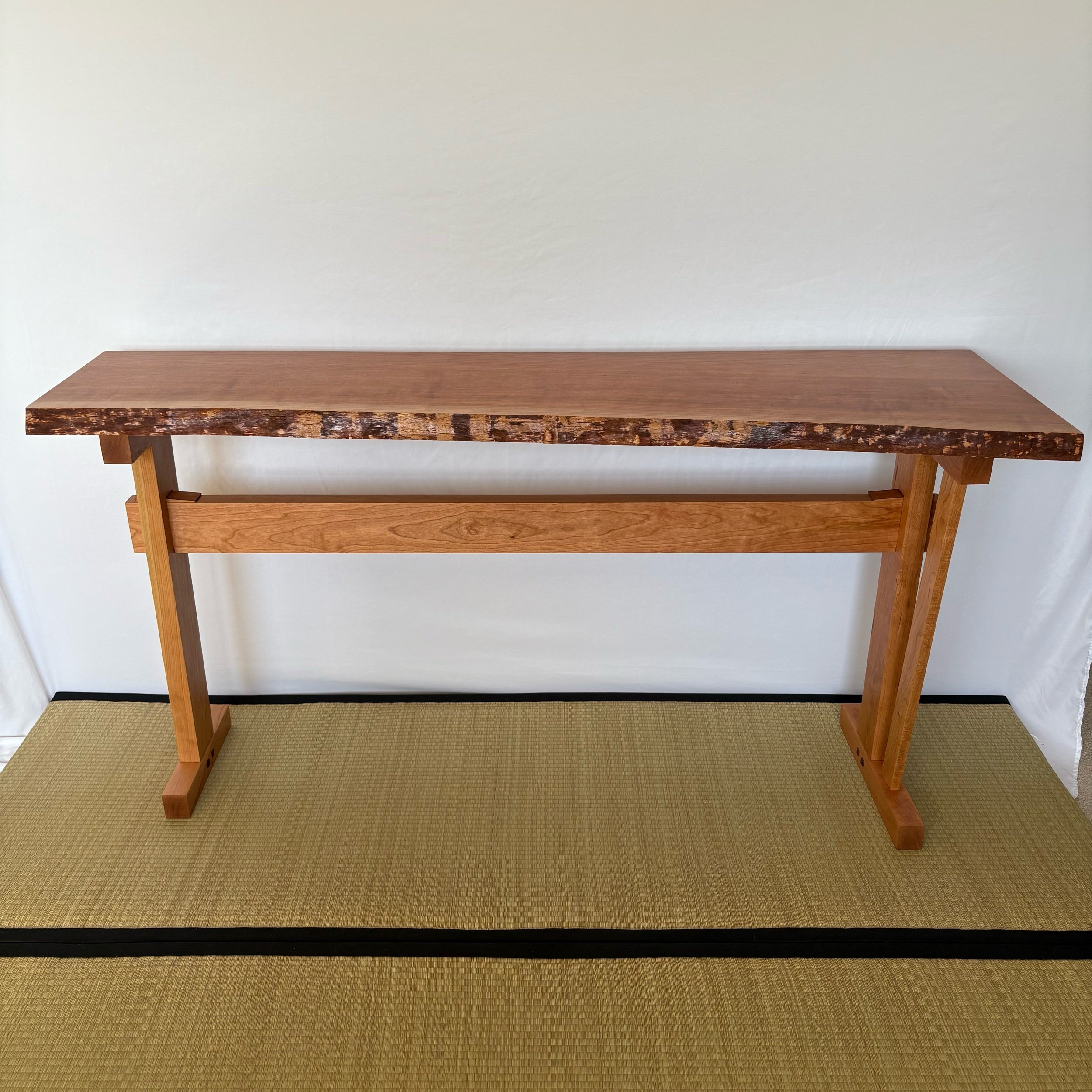
Unkai: Learning to Design With the Wood
Some furniture projects teach technical skills. Others teach design. Unkai taught me something deeper: how to listen to the material itself.
Looking back, Unkai represents one of the first truly high-end pieces I built. Not because it was my most complex project at the time, and not because it required the most difficult joinery. Instead, it was the first piece where I felt my design philosophy begin to mature.
It marked a transition away from building repeatable furniture and toward creating one-of-a-kind pieces that could only exist because of the particular wood used to build them.
The Slab That Refused to Become Cutting Boards
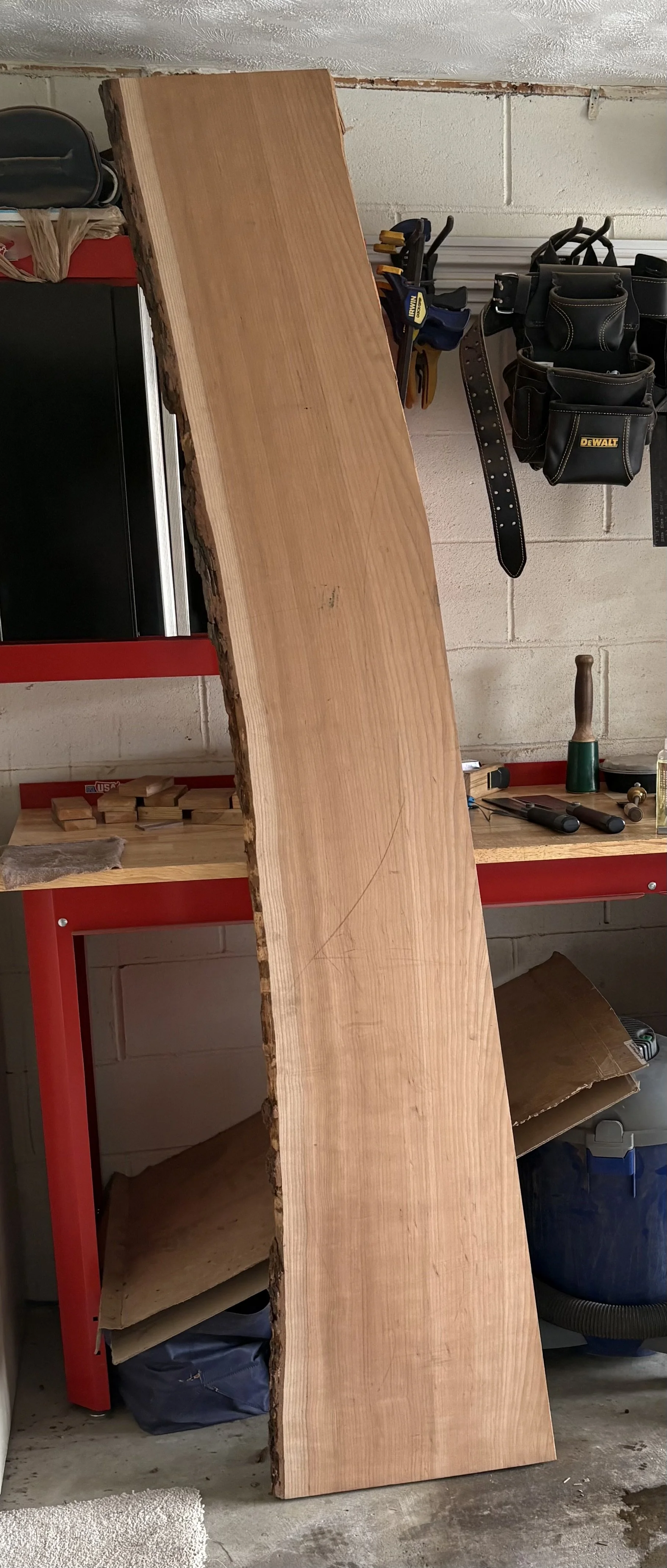
The story of Unkai began with a cherry slab. Originally, I had no grand plans for it. In fact, I intended to cut it apart and turn it into cutting boards and charcuterie boards.
But every time I looked at it, I hesitated. The slab possessed qualities that felt too special to break down into smaller pieces. Its grain was unusually straight and refined. Much of the board displayed quarter-sawn grain, and large portions contained medullary ray flecking, a feature rarely seen so prominently in cherry.
Instead of cutting it up, I set it aside. For a long time, it sat in my garage waiting for the right project.
The Design Problem
The slab presented an immediate challenge. One side tapered noticeably.
The obvious solution would have been to cut a straight edge and remove the asymmetry entirely. Doing so would have made designing the base easier and more predictable.
I considered it, but I couldn't bring myself to remove that much material. The more I studied the slab, the more I realized the taper was not a flaw that needed correction. It was part of the slab's identity.
The challenge became finding a way to make the asymmetry feel intentional. I wanted the final piece to look inevitable, as though the slab and base could not have been designed any other way.
Waiting for the Right Design
Unlike many of my projects, Unkai did not go through dozens of sketches.
I spent time with the slab and a notebook, thinking through possibilities. Many ideas likely passed through my mind, but none held my attention for long enough to become actual designs.
Then the answer appeared. The trestle base would remain symmetrical; the slab would not. An angled support could be positioned beneath the wider portion of the slab, allowing the structure to acknowledge the asymmetry without becoming visually awkward.
The moment that concept appeared, I knew it was the correct solution. Everything else followed naturally.
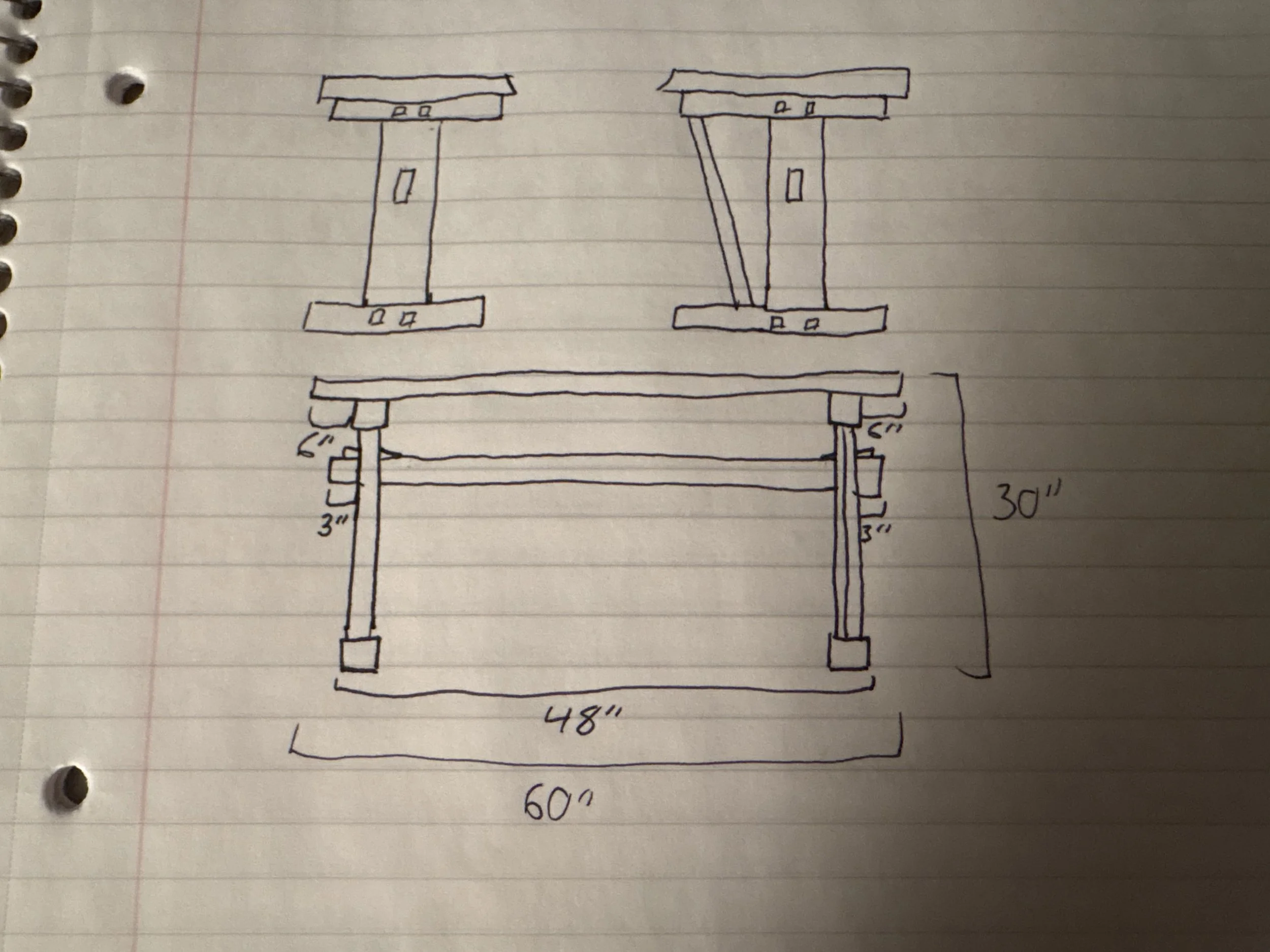
Original sketch of Unkai
Influences From Japanese Woodworking
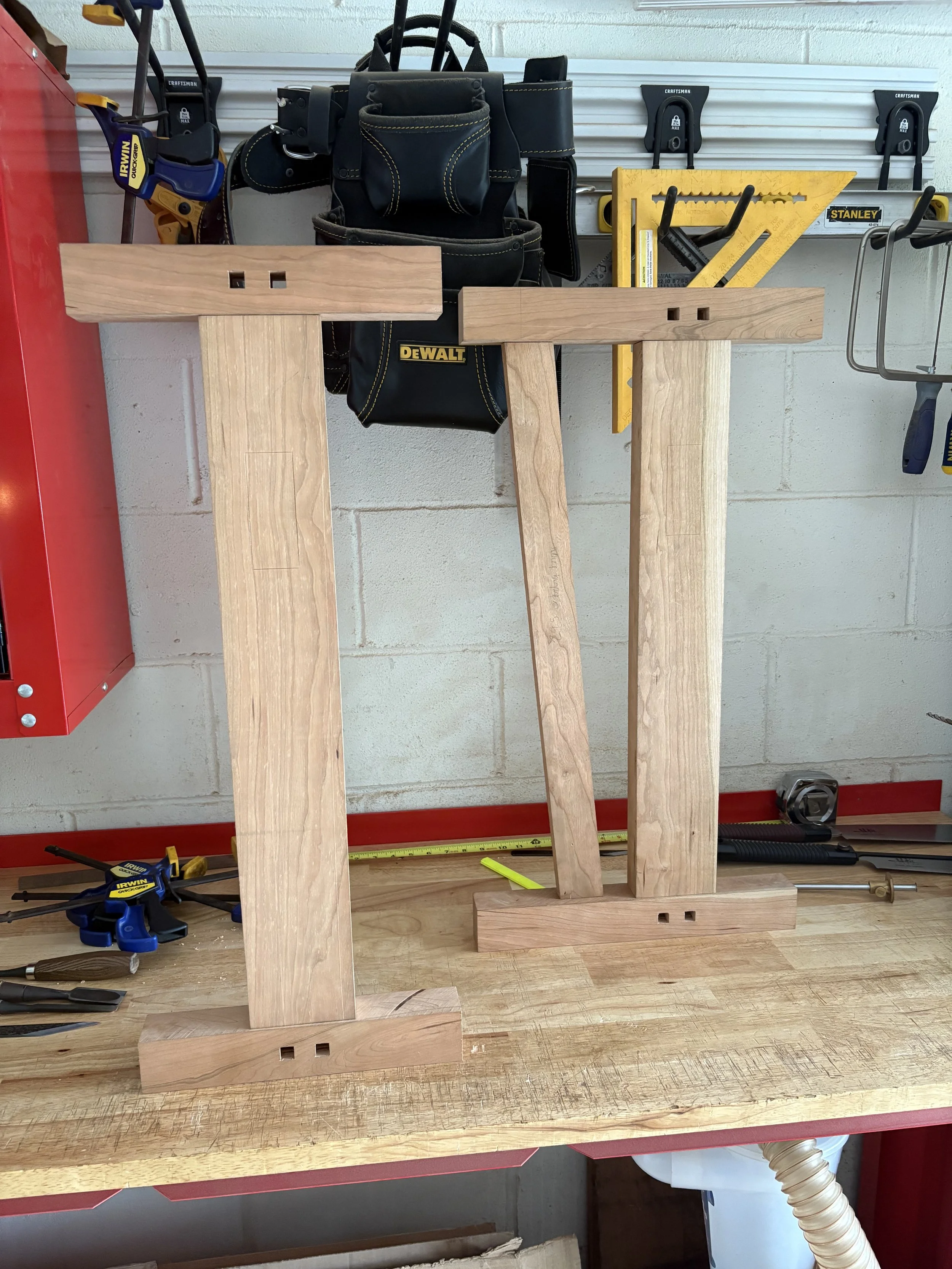
Japanese woodworking has influenced both my design language and my philosophy toward furniture.
The base itself draws inspiration from traditional Japanese sawhorses, which often rely on robust mortise-and-tenon construction secured with pegs rather than metal fasteners.
These structures are simple, durable, and honest. That honesty was important to me.
I did not want the table to be held together by hidden screws or mechanical fasteners wherever they could be avoided. Instead, I wanted the wood to connect to itself through joinery.
In many ways, that philosophy reflects a broader respect for the material. Rather than forcing components together, the joinery relies on precise fits, friction, and gravity to create strength. The structure works with the material rather than against it.
The Influence of George Nakashima
George Nakashima's work has long been one of my greatest inspirations. His furniture demonstrated that natural slabs could be elevated beyond rustic furniture and become something architectural and timeless.
What particularly influenced me was his use of visual hierarchy within a base. Different thicknesses create depth and establish relationships between structural elements. I wanted to incorporate that same sense of hierarchy into Unkai.
The stretcher, legs, cleats, and supports each serve a distinct visual purpose while contributing to a unified composition.
At the same time, Unkai reflects my own approach. My joinery is more prominently displayed. Pegs and wedges are intentionally visible. The forms are generally more angular. I also tend to use stronger wood contrasts within joinery details than Nakashima typically employed.
In Unkai, walnut pegs punctuate the cherry structure, creating subtle points of contrast throughout the piece.
The Details That Define the Piece
Several design elements that would later become signatures of my work first came together in Unkai.
The through-tenon joinery is visible and celebrated rather than concealed.
The walnut pegs provide contrast while emphasizing the structure.
The stretcher is positioned according to the golden ratio rather than centered, creating a more dynamic relationship between the upper and lower portions of the base.
The angled support resolves the asymmetry of the slab while preserving the symmetry of the trestle itself.
None of these elements dominate the design individually. Their strength comes from their interaction with one another.
The Moment I Knew It Worked
The first confirmation came during the dry assembly.
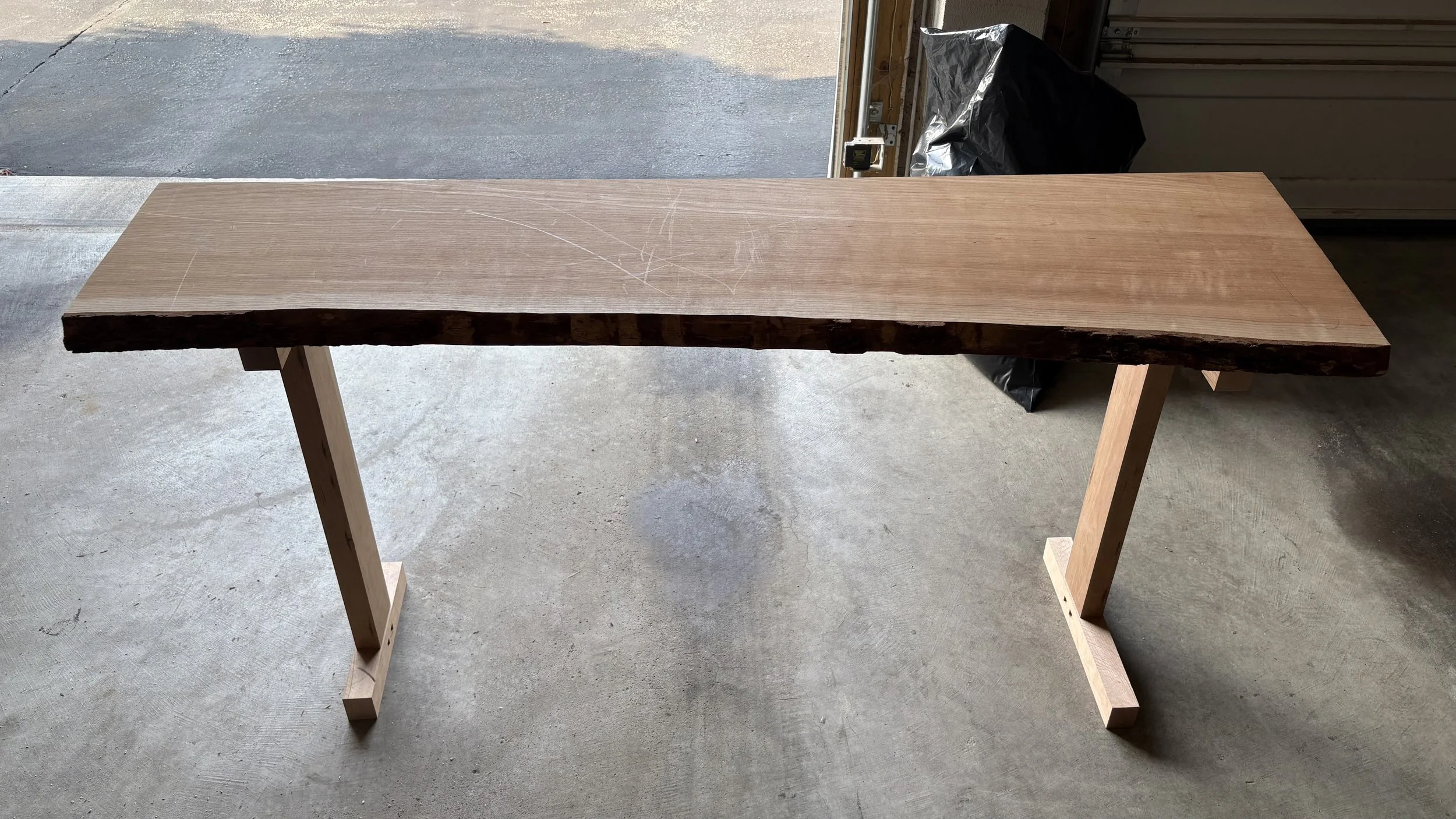
Before that moment, I knew the design worked on paper. After the dry fit, I knew it worked in reality. The asymmetrical slab no longer felt awkward. The base did not appear strange or forced. Instead, everything looked balanced and natural.
Most importantly, the design felt inevitable.
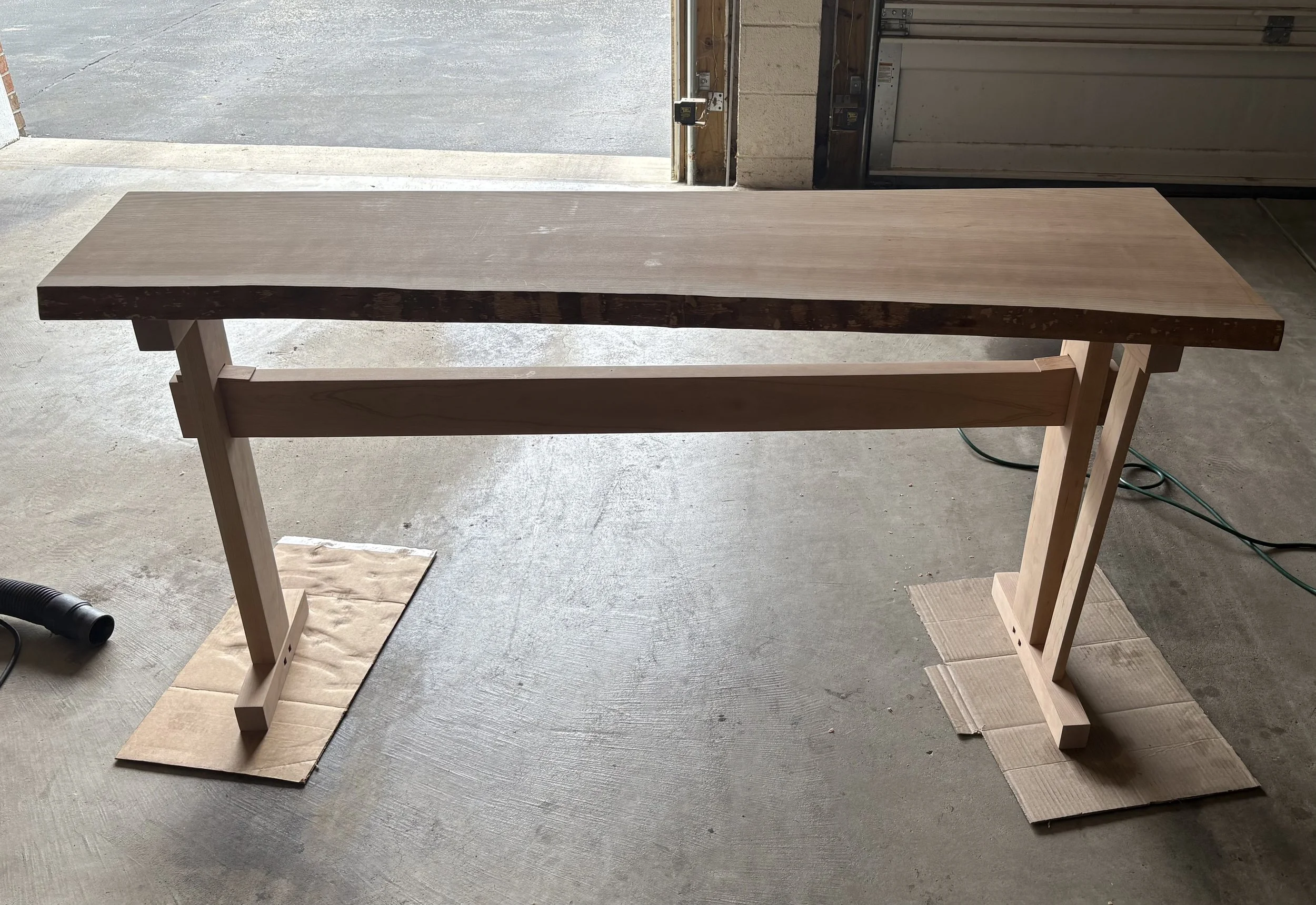
Unkai’s first complete dry fitting
The second turning point came when the finish was applied. The cherry immediately deepened into a rich reddish-brown tone unlike most cherry I had previously worked with. The grain began to shimmer.
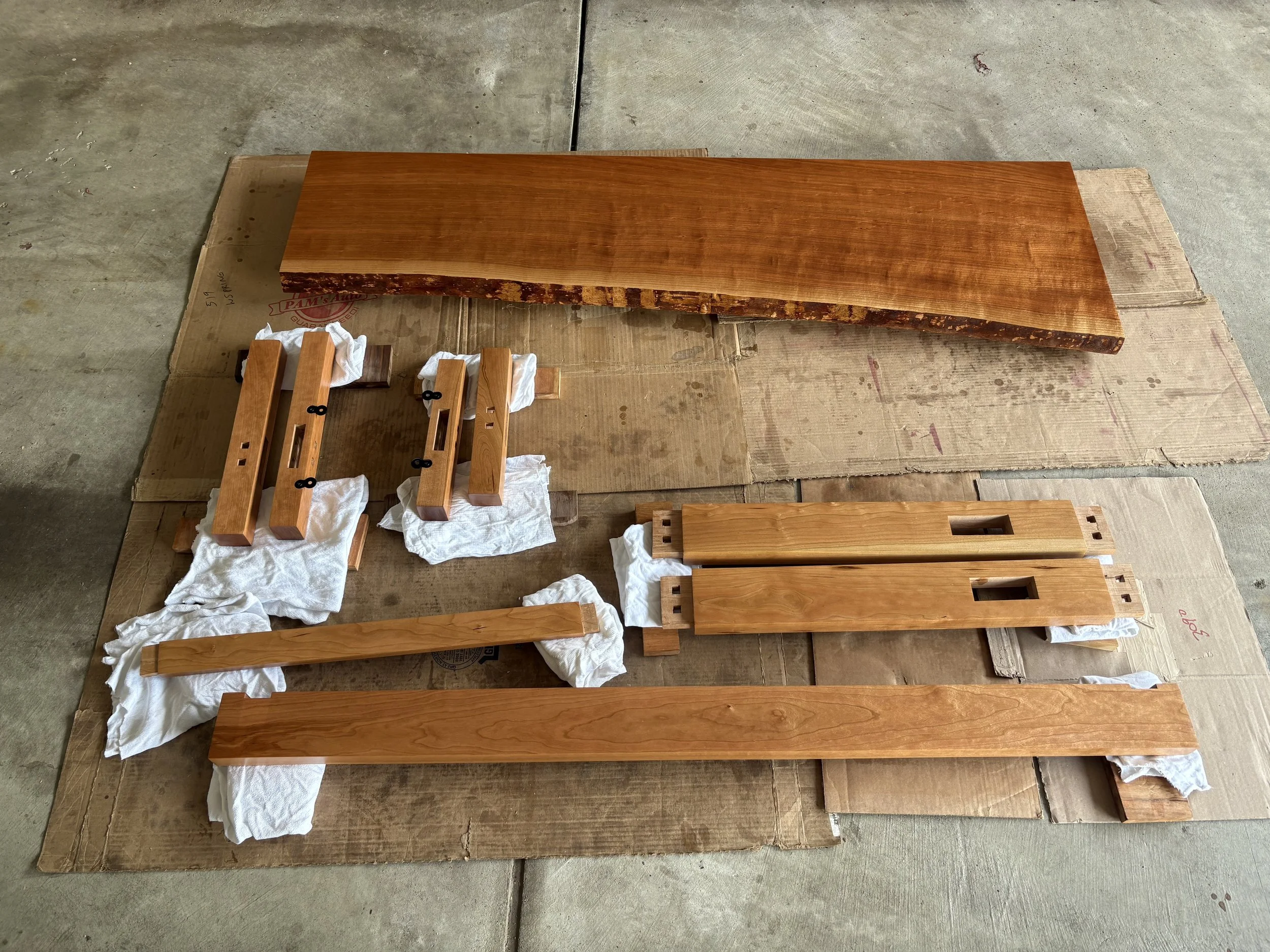
Unkai’s first coat of finish
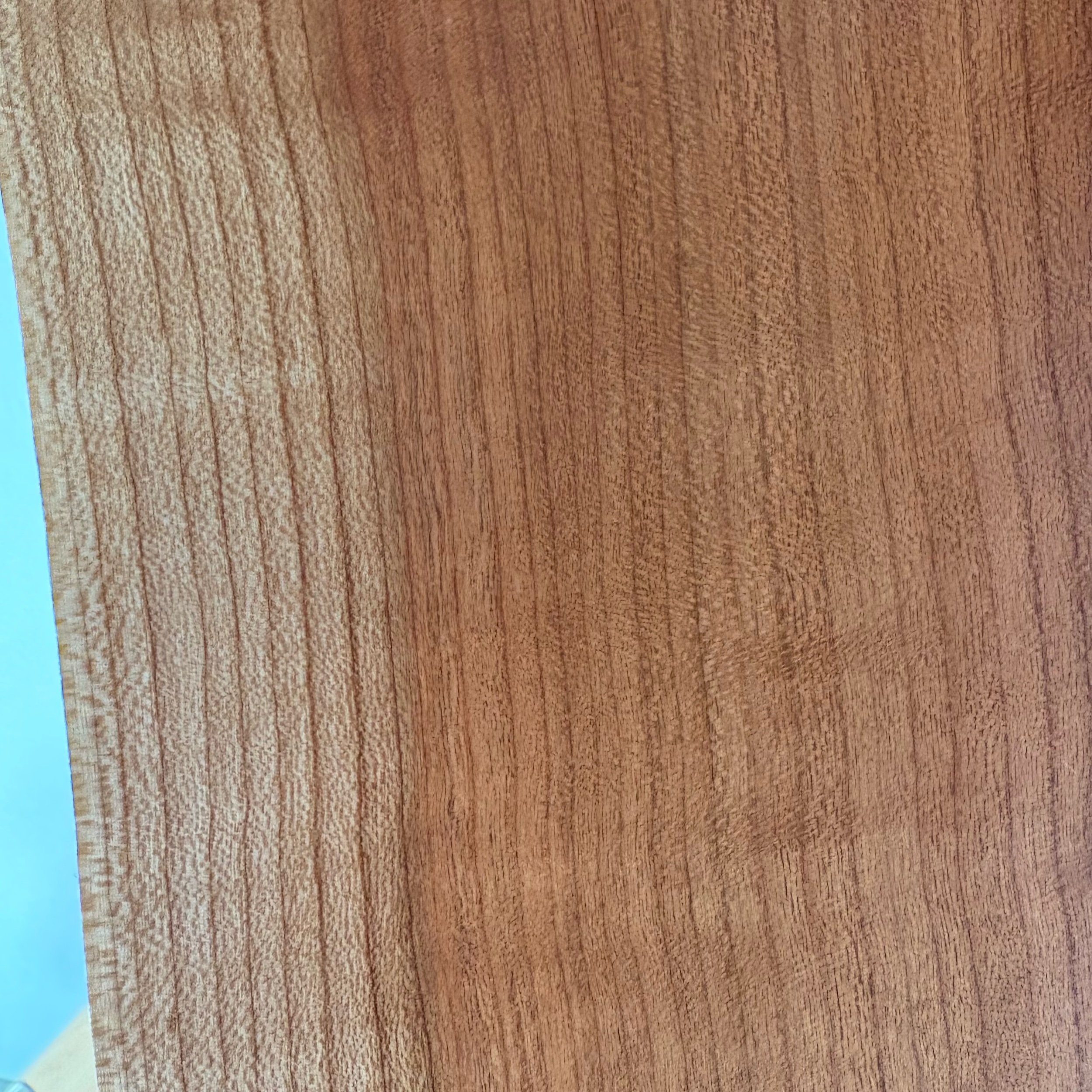
Even more surprising was the underside of the slab. Large areas of medullary ray fleck became visible, creating an almost sparkling appearance that many viewers never notice. It felt as though the wood was revealing qualities that had been hidden all along.
What Unkai Taught Me
The most important lesson Unkai taught me was that the wood should influence the design.
Before this project, I often approached furniture by creating a design first and then finding material to fit it. Unkai reversed that relationship. The slab dictated the design, its taper dictated the structure, its character dictated the proportions, and its asymmetry dictated the solution.
Rather than forcing the wood to conform to an idea, I allowed the idea to emerge from the wood itself.
That philosophy continues to guide my work today.
When I search for slabs, I am not necessarily looking for perfection. I am often looking for individuality: unusual grain, asymmetrical shapes, natural defects, and characteristics that make a board impossible to replace.
Those characteristics become opportunities for design.
A Turning Point
When I look back at Unkai today, I see a turning point.
Earlier pieces often relied on a single design feature to carry the work. The joinery was the focal point.
Unkai became something different. It brought together asymmetry, proportion, hierarchy, material selection, contrast, and joinery into a single cohesive design.
No single detail demands attention. Instead, the piece works because all of the details support one another. That approach would go on to influence nearly every major one-of-a-kind piece I built afterward.
Many of the design ideas first explored in Unkai continue to appear throughout my work today.
Looking Back
There are very few things I would change about Unkai. In fact, I consider that one of its greatest successes. Because the design emerged from the slab itself, the final result still feels correct years later.
The only detail I would approach differently today is the treatment of the pegs. At the time, I allowed them to protrude slightly and shaped them with faceted edges reminiscent of a cut gemstone. My current work favors flush pegs made from more precious woods, creating a quieter and more refined appearance.
Everything else remains exactly as I intended.
More Than a Table
Unkai remains available for sale today. Yet its greatest value may not be as a product. Its greatest value is what it represented. It marked the moment I began shifting away from repeatable furniture and toward one-of-a-kind work. It became the ancestor of many future designs.
Perhaps most importantly, it helped establish trust. Not long after Unkai entered my portfolio, I began receiving commissions for custom furniture inspired directly by the ideas it introduced.
Clients were no longer simply purchasing furniture. They were commissioning pieces that could not exist anywhere else. For that reason, I do not think of Unkai merely as a console table.
I think of it as the project that changed the direction of Flowing Water Woodworking.