Koei: Tiger’s Shadow
Some commissions stand out because of their craftsmanship. Others stand out because of the lessons they teach. Koei became one of those rare projects that accomplished both.
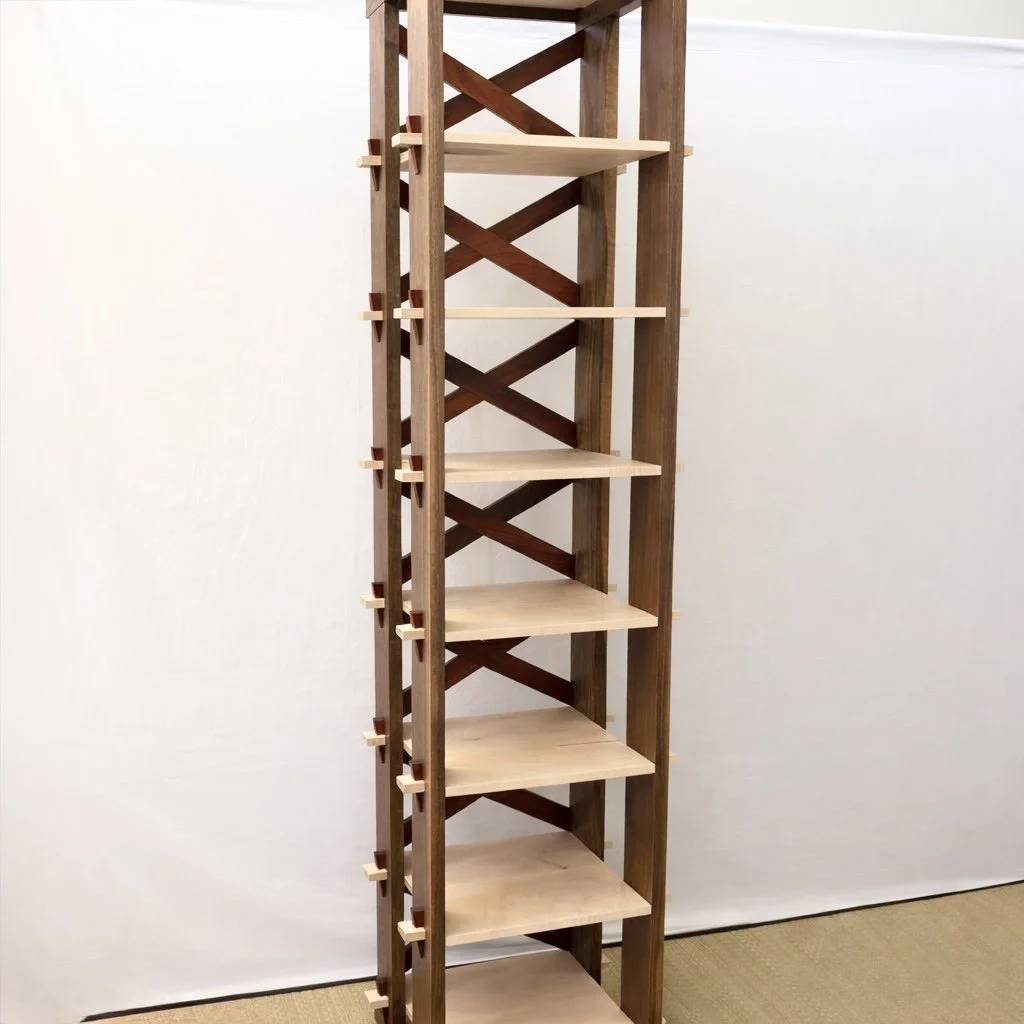
This custom solid hardwood bookcase began with a client looking for something that simply could not be purchased from a furniture store. The bookcase would live inside an alcove in their home, so every dimension was carefully planned around the room itself. Rather than adapting the room to fit the furniture, we designed the furniture to belong to the room.
The client and I developed the design together. She shared her vision for the space while I refined the proportions, materials, and joinery to create a piece that felt architectural and permanent. We ultimately settled on a bookcase that would stand nearly eight feet tall, allowing it to stretch almost from floor to ceiling and fully occupy the alcove it was designed for.
Why "Tiger's Shadow"?
Every piece I build is given a name, and this one quickly earned the name Koei, meaning Tiger's Shadow.
Part of the inspiration came directly from the materials. The tiger maple shelves displayed exceptionally bold curly figure that closely resembled the stripes of a tiger. As the light moves across the shelves, the grain seems to shimmer and shift, giving the wood an incredible sense of life.
The second inspiration came only after the piece was complete.
Standing in front of Koei felt different than standing in front of any furniture I had built before. Its towering height, exposed structure, and grounded presence inspired a quiet sense of awe. Rather than simply looking at a bookcase, it felt as though I were standing beneath something much larger than myself, much like standing in the shadow of a mighty tiger.
Choosing the Right Materials
One of my favorite parts of designing custom furniture is selecting materials that complement both the room and one another.
The tiger maple shelves were chosen for two reasons. First, the client had a beautiful maple door leading into the room, allowing the bookcase to naturally echo an existing architectural feature. Second, figured maple has a remarkable ability to reflect light. Its shimmering appearance makes a large piece feel brighter, lighter, and less visually heavy.
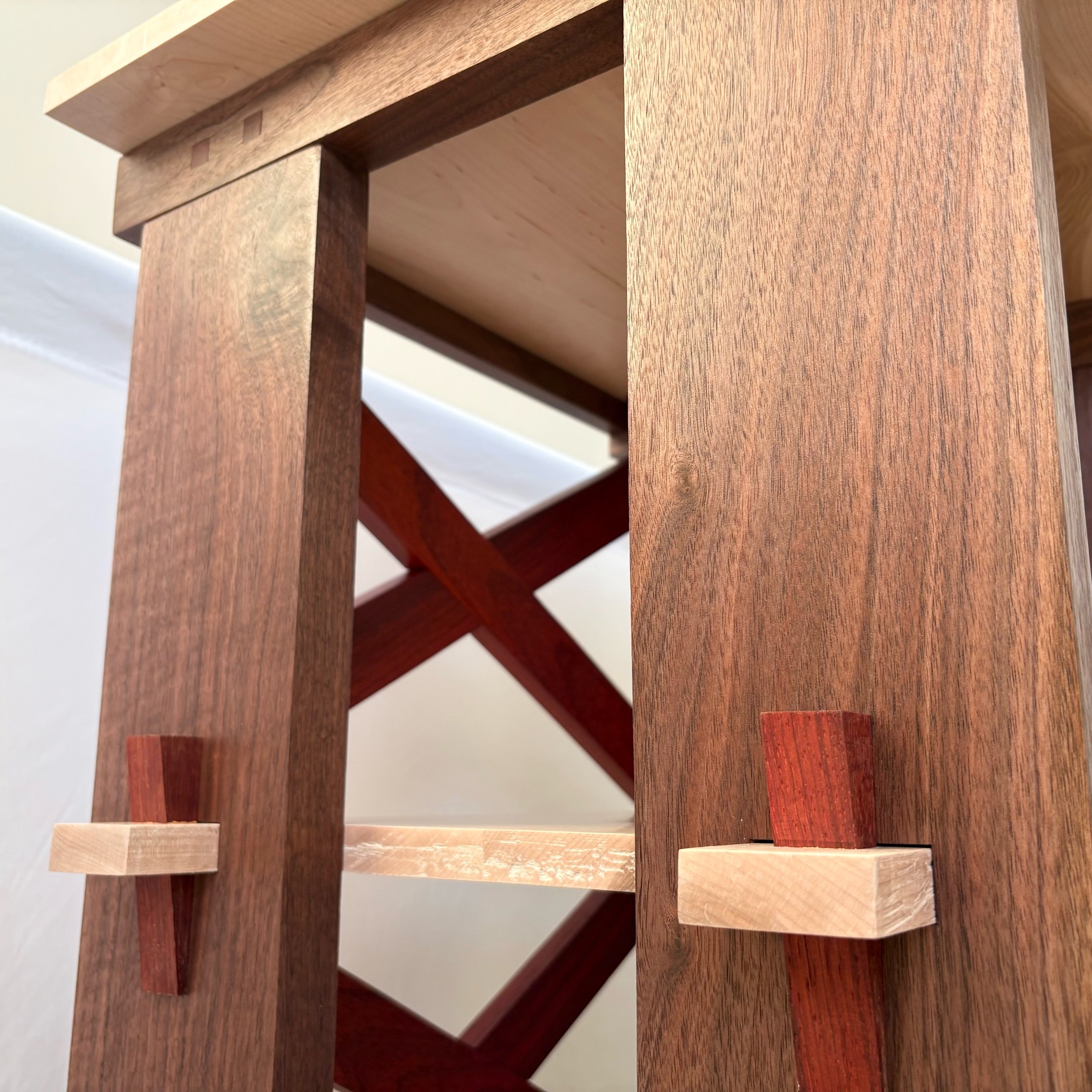
Walnut serves an entirely different purpose. Its rich chocolate tones provide a calm, stable framework that grounds the brighter materials around it. I intentionally used walnut for the uprights so the darkest wood physically meets the floor, reinforcing the sense that the structure is firmly rooted in place.
The African padauk was selected as an accent rather than a primary material. Its vibrant red color adds warmth and energy to the design without overwhelming it. When used sparingly, the padauk almost behaves like a gemstone. Small amounts provide remarkable depth, contrast, and elegance.
One subtle detail that is easy to overlook is how these three woods balance one another. The tiger maple and padauk naturally draw the eye because of their brightness and bold color. The walnut quietly performs a different role. Its deep tones allow the brighter woods to coexist without competing for attention. Although it is less visually dramatic, the walnut is ultimately the wood that ties the entire composition together.
Celebrating Structure
One design philosophy that continues to influence my work is allowing structure to become part of the design rather than something that should be hidden.
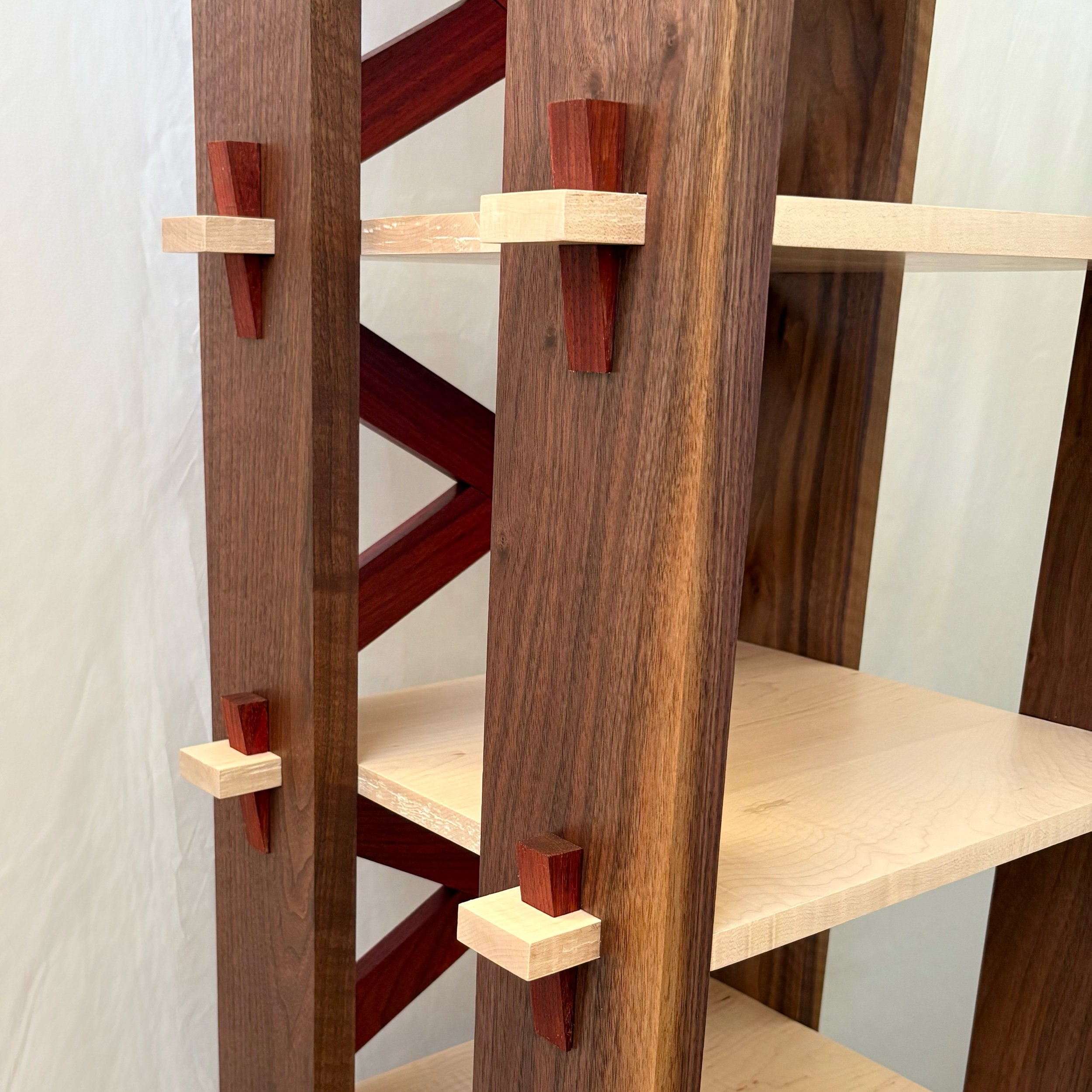
Throughout Koei, the joinery remains fully visible. The exposed tusk tenons, through tenons, and braces are not decorative additions. They are the very elements that hold the bookcase together.
When someone can follow the structure with their eyes and understand how the weight travels through the piece and into the floor, the furniture begins to feel more architectural. Rather than disguising how it was built, the construction itself becomes something worth celebrating.
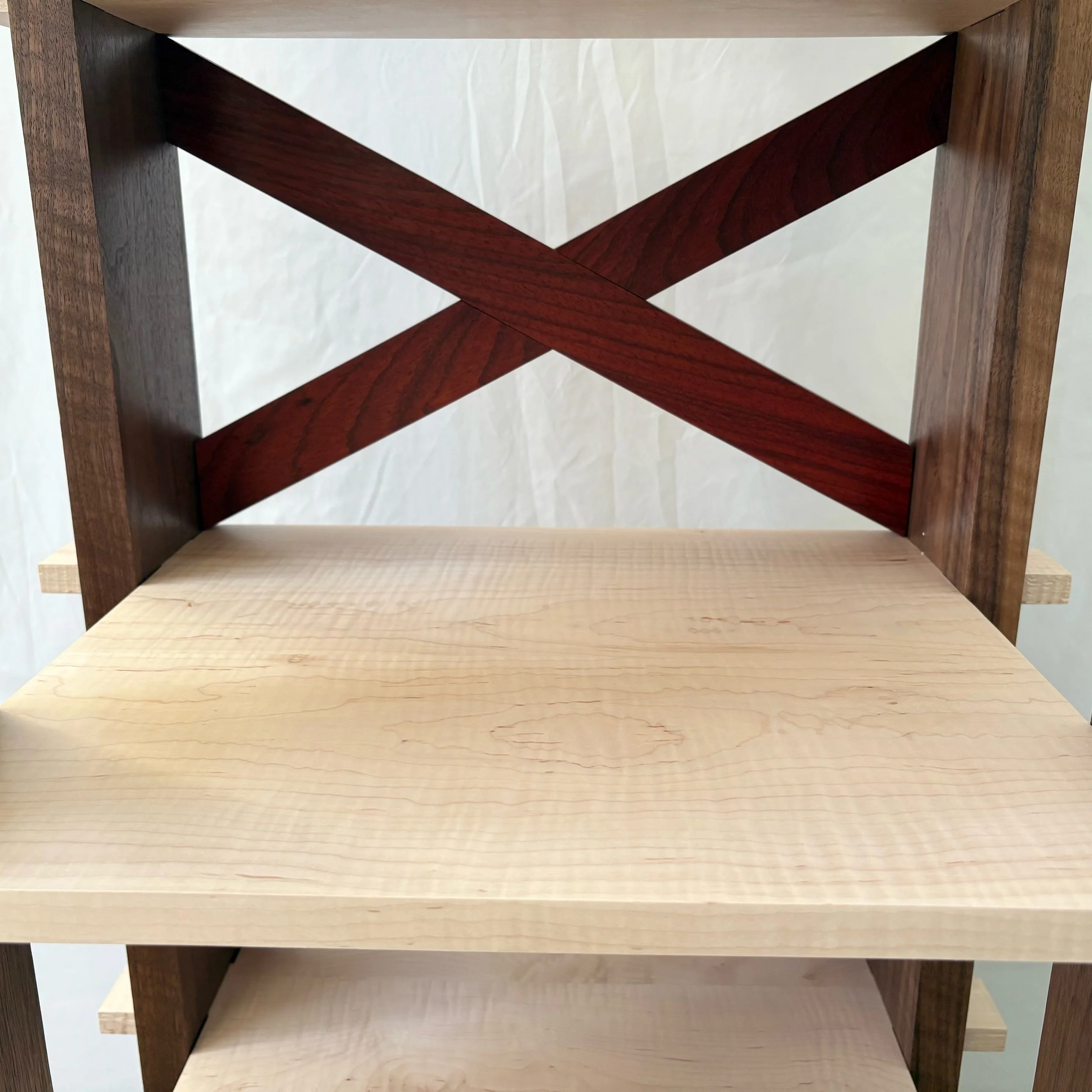
The padauk X braces also serve two purposes. Structurally, they provide additional resistance against horizontal forces, helping keep the tall bookcase rigid and stable. Visually, they create one of the strongest design features in the entire piece. Without the braces, the padauk would have had a much smaller role. Instead, each shelf becomes framed by a bold architectural composition that repeats from top to bottom.
Building Something This Large
At nearly eight feet tall and weighing well over 100 pounds, Koei introduced challenges I had never encountered before.
Constructing the bookcase required working with significantly larger and heavier components than I had used on previous projects. It also demanded careful planning, as laying out precise joinery across long spans leaves very little room for error.
Shipping presented its own challenge. We ultimately decided to ship the bookcase disassembled so each component could be packed safely and handled more easily. Watching the employees at the UPS Store realize one of the packages could nearly touch the ceiling if stood upright certainly reinforced just how large the project had become.
Standing in Koei's Presence
After completing the bookcase, something unexpected happened.
As I spent more time with the finished piece, I began noticing something I had not fully appreciated during the design process. Every shelf created the same composition. Dark walnut uprights framed bright maple shelves while the padauk X braces repeated in the background like a recurring architectural motif. Each level felt familiar, yet each invited me to pause and appreciate the details all over again.
More than anything, I was surprised by how the bookcase made me feel.
I have certainly felt proud after finishing a project before, but never had I built a piece of furniture that made me feel small in such a calming way. Standing before Koei naturally reminded me of scale. It encouraged me to slow down, appreciate the craftsmanship, and recognize that many of the things occupying our thoughts are often much smaller than they first appear.
That is ultimately the feeling I hope others experience as well.
Lessons That Continue to Shape My Work
Koei significantly expanded what I believed I was capable of building.
It taught me how to work confidently with large, heavy hardwood components. It improved my ability to lay out complex joinery over long distances while maintaining precision. Perhaps most importantly, it taught me how to balance bold materials without allowing any one of them to overpower the others.
Working with African padauk also opened the door to using exotic hardwoods in future projects. Exotic species often present unique challenges. They can be much harder than domestic hardwoods, more difficult to source, and behave differently under both tools and finishes. Learning to work successfully with those materials expanded both my technical abilities and my design language.
Many of the ideas that first appeared in Koei continue to influence my furniture today. I still enjoy using bold materials with restraint, allowing carefully chosen accents to create contrast while preserving an overall sense of balance.
Why I Love Custom Furniture
Projects like Koei remind me why I enjoy building custom furniture so much.
Every commission is an opportunity to create something that will likely never exist again. That makes each project feel incredibly special. Rather than treating it as another piece of furniture, I find myself approaching each commission with the care and respect I would give to a one of a kind object.
Designing for a specific client is equally rewarding. Every home presents different opportunities. Some clients need furniture tailored to a particular room. Others need storage designed around the objects they plan to display. Even something as simple as choosing wood species can help a piece feel like it truly belongs within its space.
That level of personalization simply isn't possible with standardized furniture.
Looking Ahead
One of the greatest advantages of custom furniture is that every detail can be tailored to the person who will ultimately live with it.
Dimensions can be designed around a specific space. Wood species can complement existing architectural features or introduce rare exotic hardwoods. Shelf spacing, proportions, and overall design can all be shaped around how the furniture will actually be used.
While recurring themes such as exposed joinery, thoughtful proportions, and balanced materials continue throughout my work, no design is ever forced into a rigid template. Every commission begins as a conversation and develops into something unique.
If you have an idea for a custom bookcase, table, or any other piece of furniture designed specifically for your home, I would love to hear about it.
