Beyond Walnut and Oak: The Extraordinary World of Exotic Wood
When most people imagine natural wood, they probably picture some variation of brown. Walnut may be dark chocolate-brown, cherry may have a warmer reddish color, and oak or maple may be substantially lighter, but the palette still seems fairly restrained.
In reality, wood is capable of far more.
There are woods that are naturally purple, orange, yellow, nearly black, or deep red. Some contain patterns that look more like stone, animal hide, or a painted landscape than something produced by a tree. Others have been prized for centuries and became synonymous with some of the finest furniture ever made.
This enormous variety is one of my favorite things about working with wood. A piece of furniture does not need stain or artificial color to have a dramatic appearance. Sometimes the material itself can provide more color and pattern than I could ever hope to create artificially.
Below are some of the woods that I find particularly interesting, ranging from species that are readily available to materials so rare that an entire commission would need to be designed around whatever could actually be found.
Natural Colors You May Not Expect From Wood
Purpleheart
Purpleheart is probably one of the best-known examples of a wood with a color that seems almost impossible.
The heartwood develops a naturally violet-purple color, sometimes becoming remarkably vivid after exposure to light and air. Over time, that color generally becomes deeper and more subdued, eventually moving toward a darker purple or plum-brown.
Despite its unusual appearance, purpleheart is not especially difficult to source. Furniture-sized boards are readily available, making it possible to use the color as anything from a small accent to a major part of a piece.
No purple stain is required. The color is simply part of the wood.
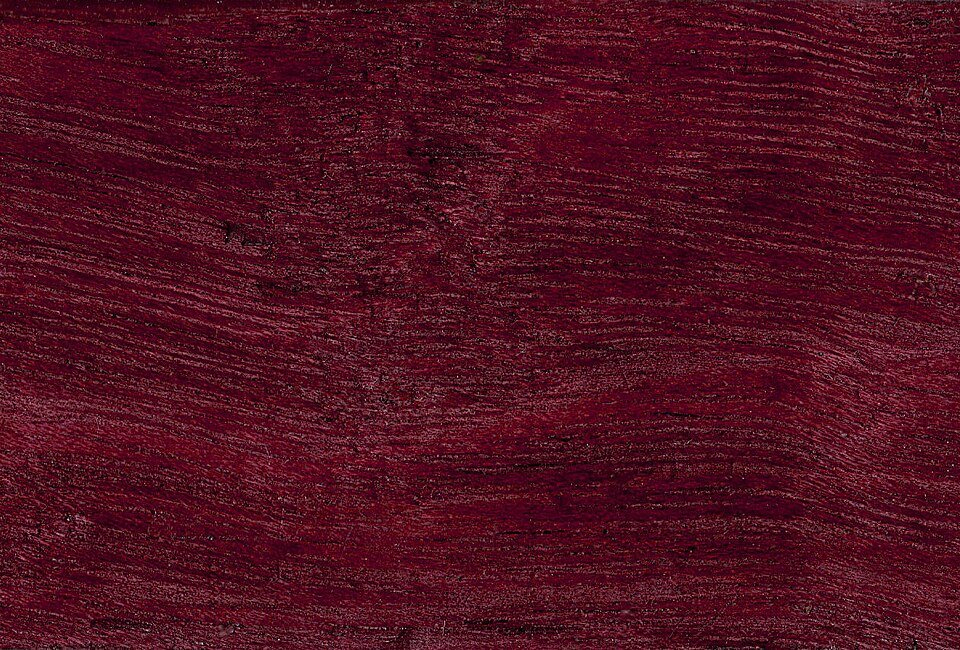
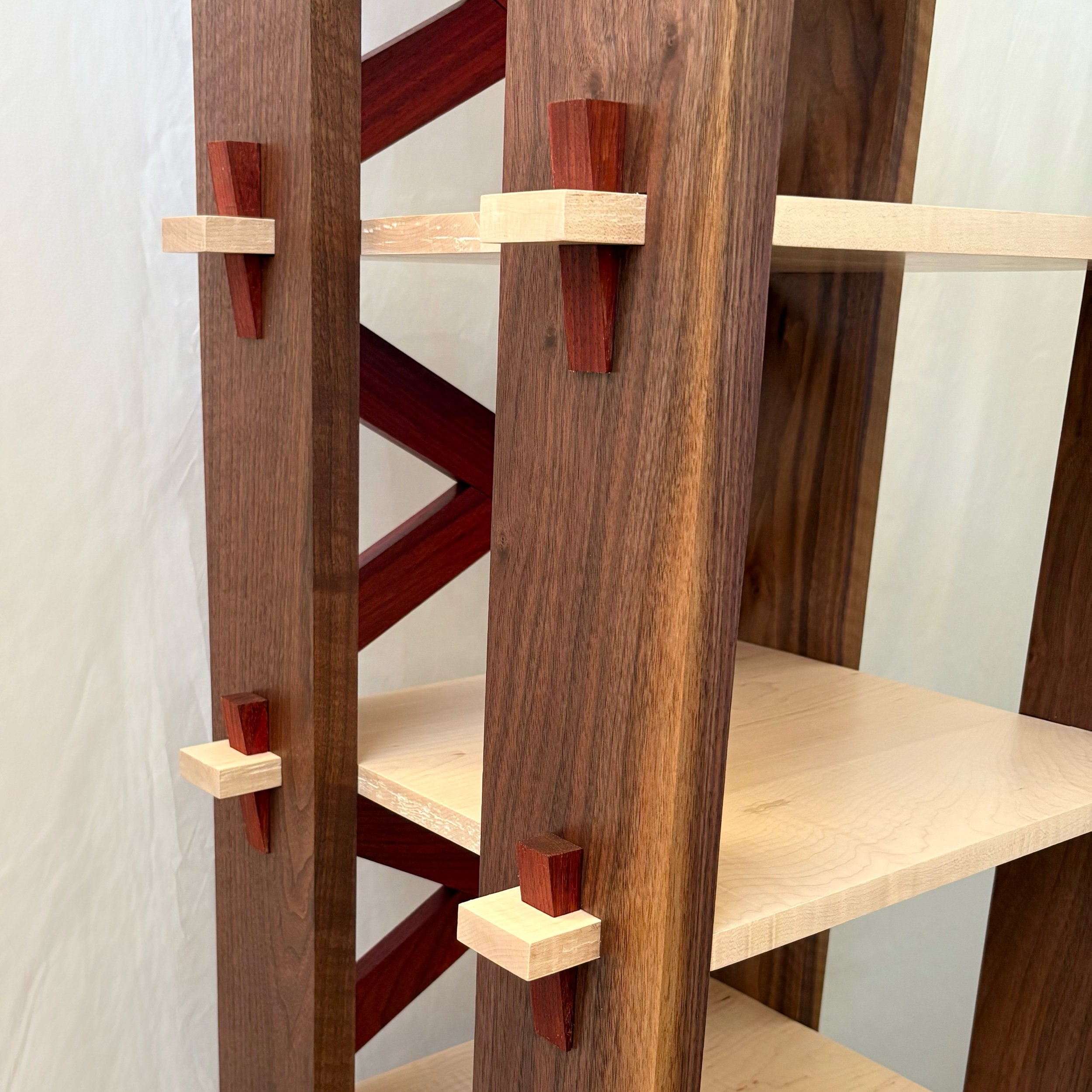
African Padauk
Freshly cut African padauk can almost look artificial. Its heartwood can be an intense reddish orange, sometimes closer to vermilion than to the brown color most people associate with wood.
Under a clear finish, I have seen padauk take on combinations of deep red, orange, and even subtle violet hues. As it ages, the color becomes darker and more restrained, eventually settling into a rich reddish-brown or brick-red appearance.
Padauk is also relatively easy to source in usable dimensions. That makes it one of the more practical options for someone who wants an unusually colorful wood without designing a project around an exceptionally rare material.
Ebony
At the opposite end of the spectrum is ebony.
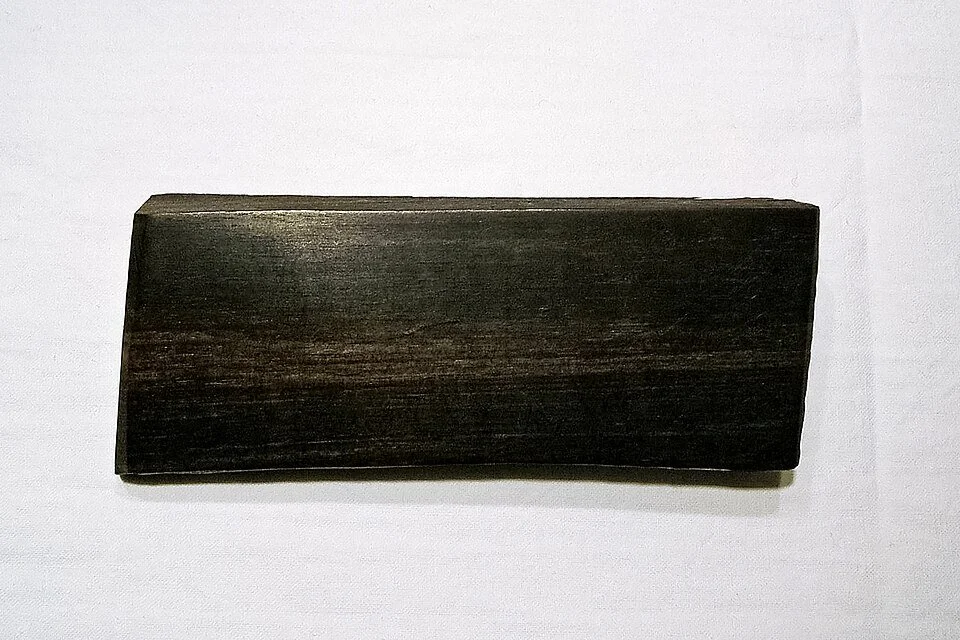
Depending on the species and the particular piece, ebony can range from very dark brown to wood that appears almost perfectly black. The darkest grades can have such little visible color variation that they barely look like wood at all.
Ebony can still be sourced, but large, clear furniture-sized boards become extraordinarily expensive. For that reason, I find it particularly interesting as a high-impact accent. A relatively small amount of genuine black ebony can create an incredibly strong contrast against a lighter wood without requiring an entire piece to be built from it.
Availability depends heavily on the species, grade, and dimensions required, so any large-scale use would need to be approached carefully.
Osage Orange
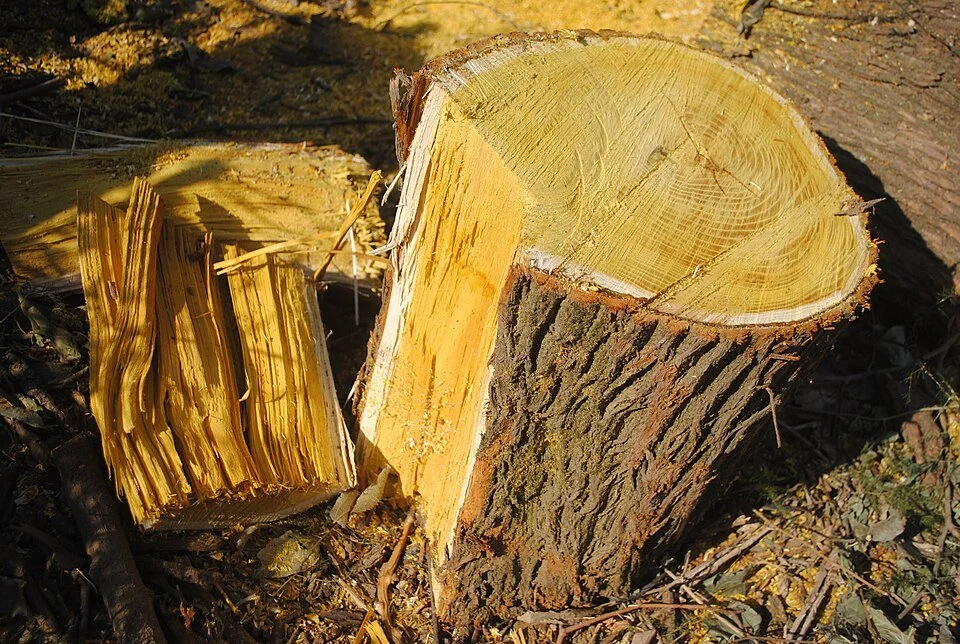
Osage orange provides another color that hardly seems possible at first glance.
Fresh heartwood can be an extremely vivid golden yellow, sometimes approaching orange. Unlike purpleheart or padauk, however, Osage orange tends to darken substantially with age and exposure to light, eventually moving toward a deeper brown.
It is not as universally stocked as purpleheart or padauk, but it is absolutely obtainable, particularly in North America.
Patterns That Hardly Look Like Wood
Color is only one part of what makes exotic woods interesting. Some species remain within a fairly familiar color palette while producing grain patterns unlike almost anything found in common domestic hardwoods.
Marblewood
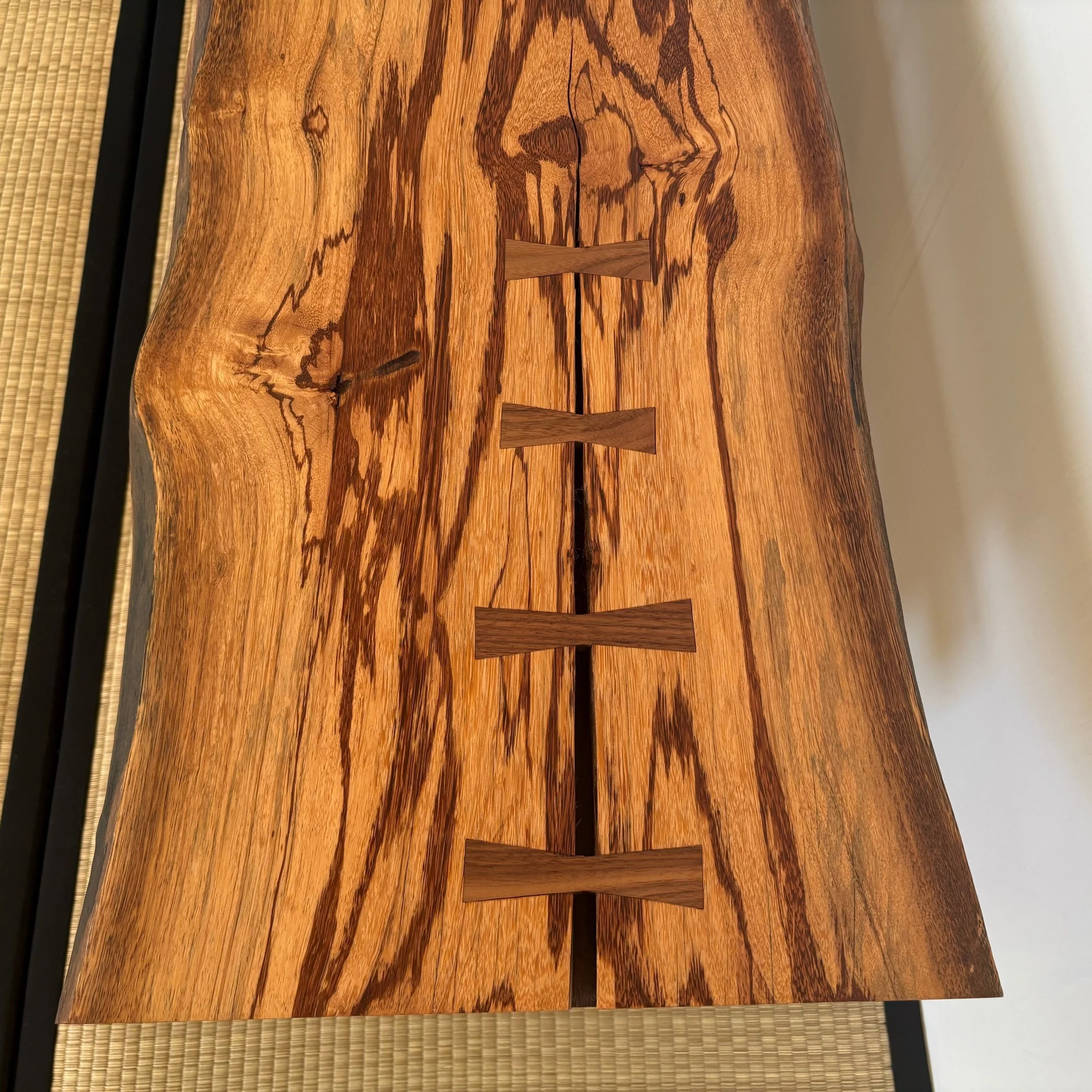
Marblewood is one of my personal favorites.
Its lighter golden or yellow-brown background is crossed by irregular dark brown to nearly black streaks. In some pieces, those streaks can also take on a subtle violet cast.
The result can look remarkably similar to veined stone, which is where the name makes immediate sense. A good piece of marblewood can almost resemble polished marble translated into wood.
It is considerably harder to source than something like walnut, cherry, or padauk. Smaller pieces can be found with some regularity, while substantial boards and slabs are much less predictable.
Leopardwood
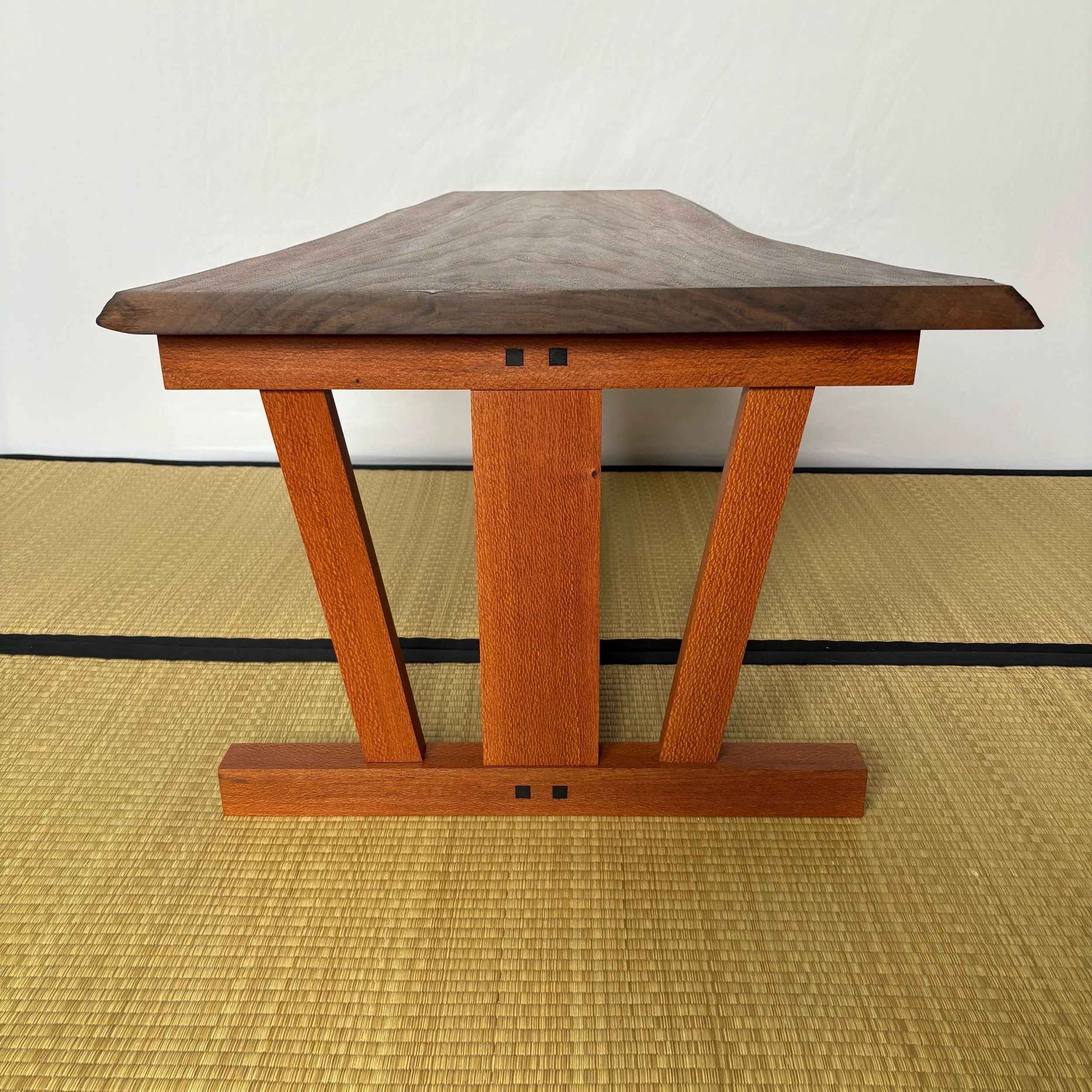
Leopardwood gets its name from its striking flecked appearance.
The wood itself is usually reddish brown, but its unusually large medullary rays create pale or grayish flecks across the surface. When the grain is oriented properly, these flecks can resemble the spots of a leopard.
The effect is completely natural and is strongest in quartersawn material.
Leopardwood itself is not necessarily extraordinarily rare, but sourcing can be inconsistent. It is the kind of material that may be readily available from one supplier and nearly absent from another.
Ziricote
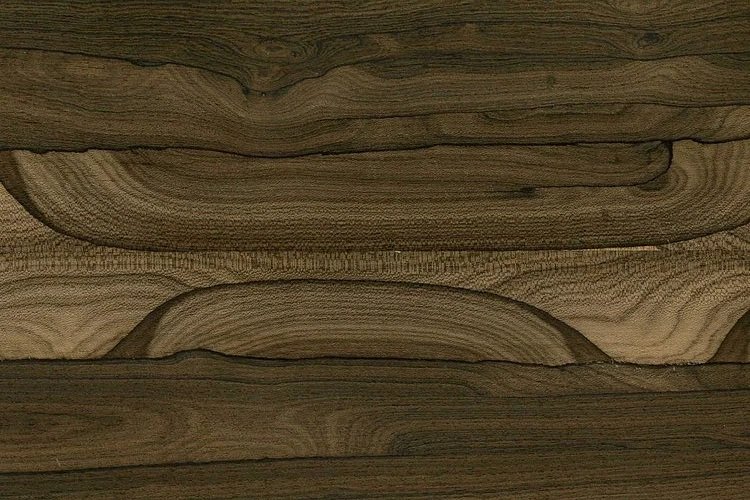
Ziricote is one of the most visually dramatic woods I know of.
Its heartwood tends to range through dark browns, frequently with even darker streaks and irregular figure running through it. Exceptional boards can develop patterns resembling spider webs, landscapes, clouds, or ink drawings.
It is expensive and relatively uncommon, but unlike some truly scarce historical timbers, furniture-sized boards do exist. A project using ziricote would likely require more material planning than a common domestic hardwood, but it remains a realistic option for fine furniture.
Snakewood
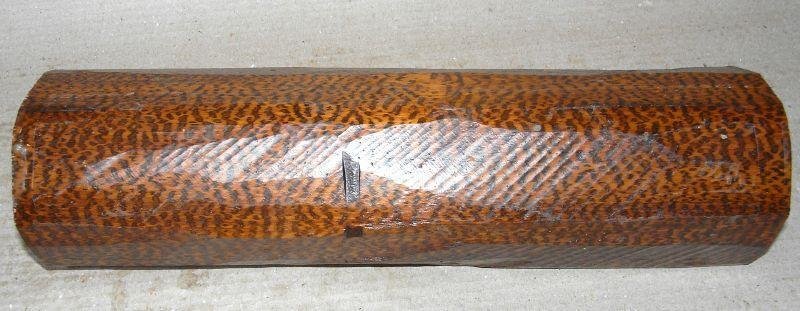
Snakewood takes natural pattern to an extreme.
Highly figured pieces have a deep reddish-brown background covered with irregular dark markings resembling scales or spots on a snake. It is also one of the most expensive exotic woods in the world by board-foot price.
The trees are relatively small, and highly figured usable material is scarce. For that reason, snakewood is much more realistic as an accent than as the primary material in a large piece of furniture.
A small amount could still have enormous visual impact. Inlays, pulls, wedges, pegs, handles, or other details could allow the pattern to become a focal point without requiring an unrealistic quantity of material.
Woods That Defined Luxury for Centuries
Some exotic woods are interesting not only because of their appearance, but because of the role they have played in the history of furniture.
Two names dominate that conversation: mahogany and rosewood.
Both names also demonstrate why common wood names can become confusing. Not everything sold as a mahogany belongs to the true mahogany genus, and not everything called a rosewood is botanically a rosewood.
Mahogany
Cuban Mahogany
Cuban mahogany, Swietenia mahagoni, is one of the great historical cabinetmaking woods.
It was extensively used in high-end furniture and decorative woodworking and became closely associated with fine eighteenth and nineteenth century furniture. Its color can range from pinkish brown to a deeper reddish brown and generally becomes richer with age.
Centuries of exploitation dramatically reduced the supply of large old-growth material. Today, substantial high-quality boards are exceptionally difficult to obtain.
That does not necessarily make a modern commission using Cuban mahogany impossible, but it changes the process. Rather than designing a piece and then simply ordering whatever dimensions are required, the available material may have to be found first and the furniture designed around it.
Genuine Mahogany
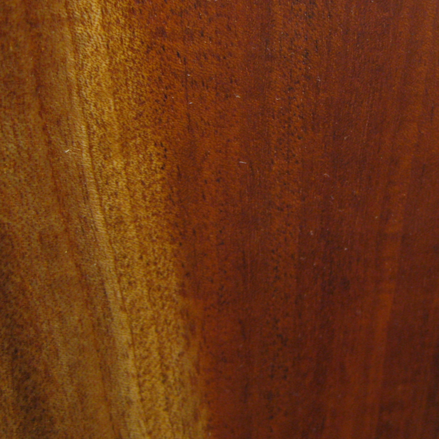
The wood commonly called genuine or Honduran mahogany, Swietenia macrophylla, is closely related to Cuban mahogany and belongs to the same genus.
It offers many of the characteristics people associate with traditional mahogany, including warm reddish-brown color, attractive grain, and excellent furniture-making properties, while generally being more obtainable than Cuban mahogany.
For someone interested in true mahogany without requiring an exceptionally scarce historical material, genuine mahogany is a far more practical option.
African Mahogany
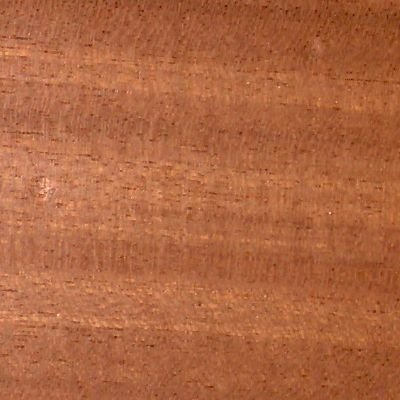
African mahogany generally refers to several species within the genus Khaya.
It is not a true Swietenia mahogany, although it belongs to the same botanical family and has long been used as one of mahogany's closest substitutes.
Its reddish-brown color can be beautiful, but one of its most distinctive features is the ribbon-like figure that can appear in quartersawn material. That gives African mahogany its own identity rather than making it merely an imitation of genuine mahogany.
Sapele
Sapele is another African wood frequently associated with mahogany.
It is neither Swietenia nor Khaya, but it belongs to the same broader botanical family. Its color ranges from golden brown into deep reddish brown, and quartersawn sapele can produce an extremely pronounced ribbon stripe.
Sapele is readily available compared with many of the woods in this article, which makes it a practical furniture material despite its exotic origin. It can serve some of the same visual roles as mahogany while maintaining a character that is distinctly its own.
Rosewood
Few names in woodworking carry as much mystique as rosewood.
True rosewoods belong to the genus Dalbergia, but the commercial name has also been attached to a number of unrelated woods with similar color, density, or grain.
Brazilian Rosewood
Brazilian rosewood, Dalbergia nigra, may be one of the most revered furniture and instrument woods in the world.
Its color can range from reddish and purplish brown to dark chocolate, frequently accompanied by striking black or nearly black streaking. It is also known for its strength, stability, density, fragrance, and exceptional acoustic properties.
Unfortunately, those same qualities drove enormous demand. Brazilian rosewood was heavily exploited for centuries and is now protected under CITES Appendix I, the most restrictive CITES listing. International commercial trade is consequently subject to extremely strict controls.
Furniture-sized pieces of documented legal stock do occasionally exist, but they are extremely scarce and expensive.
A commission involving Brazilian rosewood would therefore be almost entirely material-led. The stock would need to be located and its documentation understood before a design could realistically be developed around it.
Cocobolo
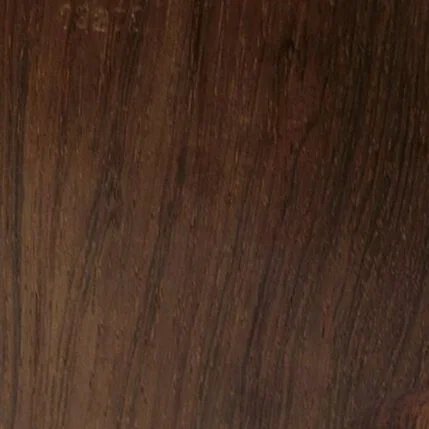
Cocobolo, Dalbergia retusa, is a true rosewood, but visually it can look dramatically different from the darker and more restrained image people may associate with the name.
Its grain can be extremely active, with combinations of orange, red, brown, purple, and nearly black appearing in the same board.
Cocobolo is expensive and supply can be inconsistent, but substantial boards and slabs do exist. That makes larger-scale furniture possible when the appropriate stock can be found.
Sissoo Rosewood
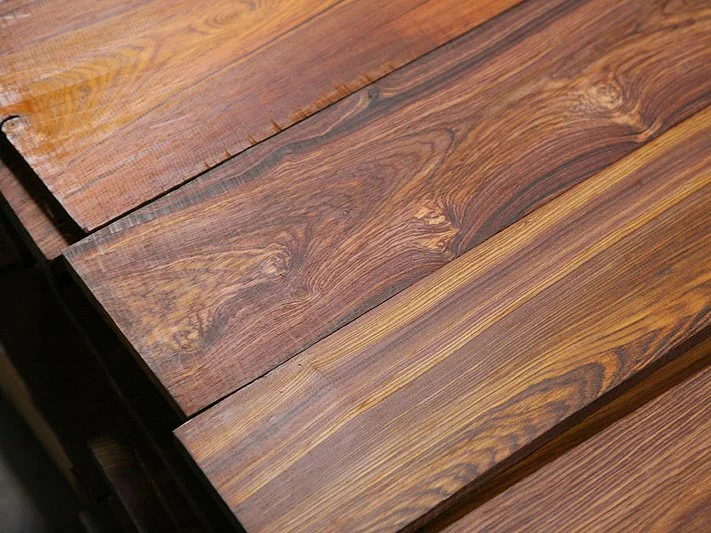
Sissoo, Dalbergia sissoo, is another true rosewood. It is sometimes called North Indian rosewood or Indian rosewood, which can create confusion with East Indian rosewood, Dalbergia latifolia.
Sissoo generally has the rich brown coloration and darker grain associated with other rosewoods, but one of the things that makes it particularly interesting for furniture is size.
Large slabs of Sissoo do exist, although they are not always readily available. Unlike many rosewoods, it can sometimes be sourced in dimensions substantial enough for entire tabletops, making it one of the more realistic true rosewoods to consider for large-scale furniture.
Patagonian Rosewood
Patagonian rosewood is a great example of how misleading common wood names can be.
The wood usually sold under this name is curupay, Anadenanthera colubrina. It is not closely related to true Dalbergia rosewoods.
It does, however, earn the comparison visually and physically. Curupay can have a reddish-brown background with dark brown or black streaking, and it is exceptionally hard and dense.
It may not be a botanical rosewood, but it can provide many of the characteristics that make dense tropical hardwoods so visually and physically distinctive.
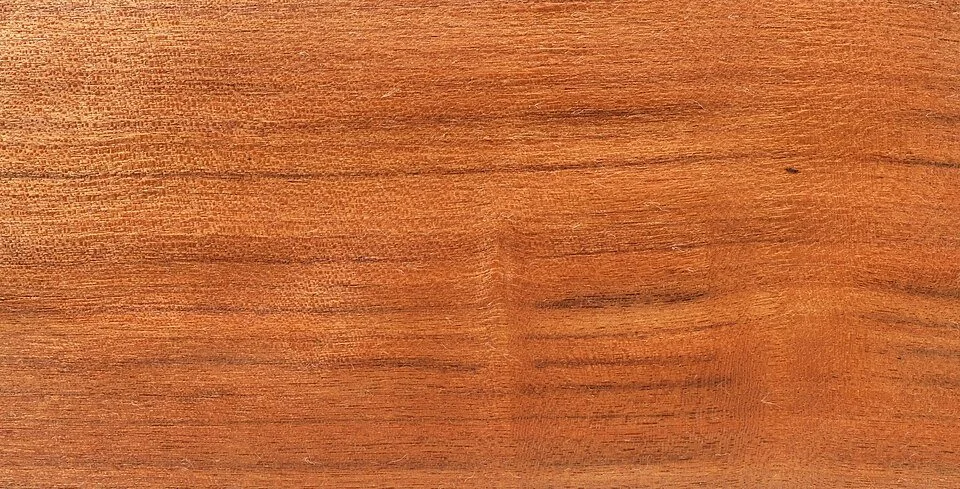
Exotic Woods Prized for Durability
Not every exotic hardwood became valuable because of dramatic figure, unusual color, or rarity.
Some became valuable because they survive conditions that destroy most woods.
Teak
Teak is perhaps the classic example.
Its combination of dimensional stability, natural durability, and resistance to moisture has made it famous in shipbuilding, exterior furniture, decking, and other applications exposed to demanding environments.
For furniture intended to encounter humidity, weather, or frequent moisture, teak occupies a very different role from something like snakewood or ziricote. Its appeal is not primarily spectacle. It is performance.
A well-designed piece of teak furniture can remain relatively visually restrained while using one of the most historically respected outdoor and marine timbers available.
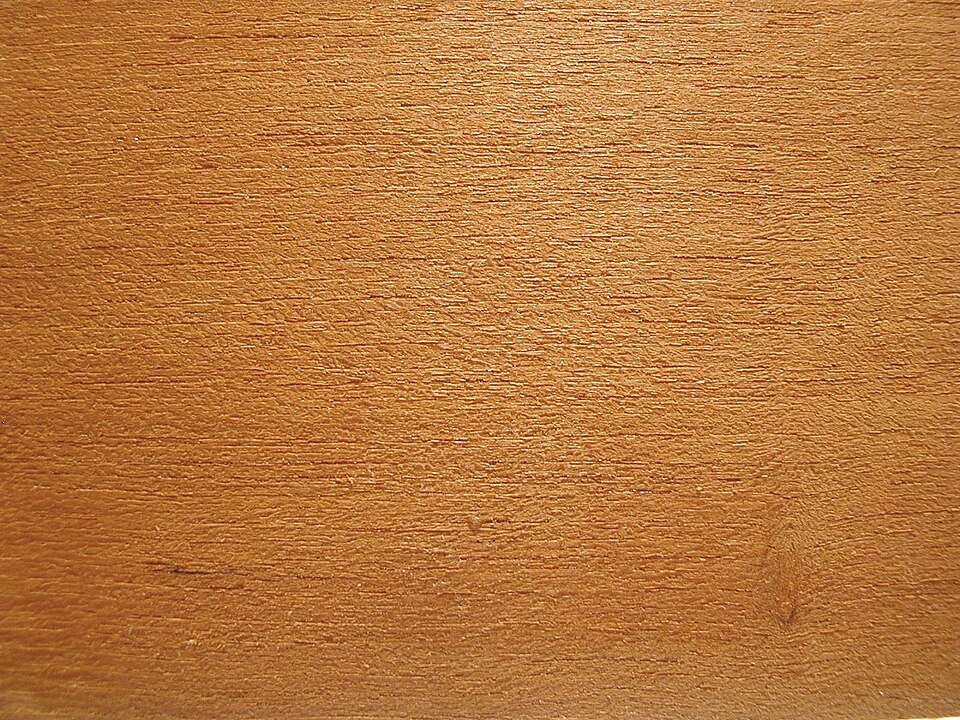
The Subtler Side of Exotic Wood
Not every exotic species announces itself through purple color, black spider-web figure, or centuries of prestige.
Some look surprisingly familiar.
At first glance, they may resemble slightly different versions of woods many people already know. Their differences become more apparent through color, density, grain, texture, or the way the surface reflects light after finishing.
Jatoba
Jatoba is often sold under the commercial name Brazilian cherry, although it is not botanically related to cherry.
Its heartwood ranges from orangish brown into deeper reddish brown and tends to darken with exposure to light. That warm red-brown appearance helps explain the cherry comparison.
Physically, however, jatoba is an extremely hard and dense wood, far harder than American black cherry. It can also take on a beautiful natural luster when finished.
For someone who likes the warmth of cherry but wants something substantially denser and more visually intense, jatoba can be a fascinating alternative.
Bolivian Coffeewood
Bolivian coffeewood, also known as Momoqui, occupies a different part of the exotic palette.
Rather than relying on brilliant color, it offers warm coffee and chocolate-brown tones, sometimes with golden or darker streaking. In that sense, it can occupy some of the same visual territory as black walnut while still feeling distinctly different.
Momoqui is also exceptionally dense and hard. It is dramatically harder than walnut.
This is the type of exotic wood I find particularly interesting because it does not need to immediately announce itself as unusual. From across a room it may simply look like a beautiful dark brown hardwood. Up close, the differences become much more obvious.
Peruvian Walnut
Peruvian walnut provides an even more direct comparison with a familiar domestic species because it actually belongs to the walnut genus, Juglans.
Its heartwood is often darker than temperate walnut, with deep chocolate-brown colors that can sometimes carry a subtle purplish hue.
Unlike jatoba or Bolivian coffeewood, its distinction is not extreme hardness. Published hardness values are actually similar to American black walnut. Its appeal comes primarily from its deeper coloration and the different character offered by tropical members of the walnut family.
Rarity Does Not Automatically Make Better Furniture
With all of these unusual materials, I think it is important to make one distinction.
Rarity and price do not automatically make one wood better than another.
Brazilian rosewood is not inherently more appropriate for a piece simply because it is extraordinarily scarce. Snakewood does not become more beautiful by covering an entire piece with it. Sometimes an exceptional board of walnut, cherry, or maple can contribute far more to a design than a wood worth many times as much.
The material still has to serve the furniture.
In fact, I often find rare woods most powerful when they are given restraint. A small ebony detail against maple may have more impact than an entire black surface. A few snakewood wedges could become a focal point precisely because the rest of the piece is quiet. An extraordinary rosewood top may deserve a much simpler base so that nothing competes with the grain.
The goal is not to use the rarest material possible.
The goal is to find the material that makes the design better.
What This Means for a Custom Piece
One of the things I enjoy most about commissioned furniture is that the material palette does not have to end with walnut, cherry, maple, and oak.
Those are beautiful woods, and I use them often. But they represent only a small fraction of what exists.
A commission could begin with the desire for a particular type of furniture. It could also begin with a material.
Maybe it is a quiet walnut console with small ebony details. Maybe it is a writing desk built around an exceptional rosewood board. Maybe a restrained maple piece gets a few bright padauk wedges. Maybe the entire design begins with an unusual marblewood slab that needs to remain the center of attention.
With particularly rare woods, the process can even work in reverse. Instead of designing the furniture first and ordering lumber afterward, I may need to locate the material, study its dimensions and character, and allow the design to emerge from what actually exists.
That is part of what makes one-of-a-kind work interesting to me.
Wood offers an enormous natural palette of color, pattern, history, texture, and physical properties. My job is not to overpower those things. It is to understand what the material already offers and design something that gives it a reason to be noticed.
