Named Yukyu, meaning “eternity” or “enduring time,” this one-of-a-kind writing desk is built as a Japanese-style floor-sitting desk, designed for use from a seated position close to the ground rather than from a conventional chair. Its low proportions give the piece a calm, grounded presence and place the writing surface, joinery, drawers, and materials directly within the user’s field of view.
At the center of the design is an extraordinary stock of century-old Caribbean rosewood. The wood was harvested roughly one hundred years ago and preserved in excellent storage conditions ever since, allowing it to remain remarkably clean, stable, and vivid in color. Material of this age, quality, and size is increasingly difficult to find, especially in broad, flawless boards suitable for a large uninterrupted writing surface.
The top is the visual centerpiece of the desk. Caribbean rosewood is naturally dense, richly colored, and intensely chatoyant, and this particular stock seems to shift across the surface as the light changes. Even where the grain is relatively quiet, the wood has a deep reflective shimmer that gives the top a sense of movement and depth. Rosewood is also carried into the drawer fronts, tusk-tenon keys, pegs, and other small details throughout the base, allowing the rare material to appear repeatedly without overwhelming the warmer cherry structure beneath it.
The base is constructed from solid cherry and rooted in traditional trestle construction and Japanese-inspired woodworking. Exposed tusk tenons, contrasting pegs, through-tenon details, and carefully proportioned structural members make the joinery part of the design rather than something hidden from view. Because of the desk’s low floor-sitting proportions, these structural details become especially intimate and visible during use. The result is a piece that reveals more of its construction the closer it is examined.
One of the most unusual details is the treatment of the drawers themselves. Rather than concealing the drawer sides inside a cabinet, I intentionally designed the desk so that they remain visible from the exterior. This means the drawer sides are not secondary or hidden components; they are part of the architecture of the piece and have to be finished to the same standard as every other visible surface. In conventional drawer construction, these parts are often made from simpler or less visually important material because they are rarely seen. In Yukyu, there is nowhere to hide. Every surface, joint, and transition is exposed enough to matter, and every detail is intended to be beautiful enough to deserve being seen.
The drawers are also among the most labor-intensive elements in the desk. Each is hand-fitted and constructed with hand-cut half-blind dovetails, allowing the rosewood drawer fronts to remain visually uninterrupted while concealing one side of the joint within the front itself. This form of dovetailing demands careful layout and precision, and has long been associated with fine cabinetmaking. Combined with the visible drawer sides, rosewood fronts, and antique-inspired brass pulls, the drawer construction becomes a focal point rather than a hidden mechanical necessity.
Designed as both a functional writing desk and a sculptural piece of furniture, Yukyu is meant to reward close inspection from every angle. Its floor-sitting format, century-old rosewood, exposed joinery, visible drawer construction, hand-cut dovetails, and solid cherry framework come together as a study in material, structure, permanence, and the intimacy of traditional low furniture.
This particular desk is retained in my personal collection and is not available for purchase. However, the design can be reinterpreted as a custom commission using similarly exceptional rare, figured, or historic woods. Because material of this caliber is inherently limited, each future version would be individually designed around the wood available rather than treated as an exact reproduction.
Materials:
• Caribbean rosewood harvested 100 years ago used for desktop, drawer fronts, pegs, and wedges
• Base made from hand-selected cherry hardwood
• Finished with Osmo hardwax oil for a smooth, satin-sheen surface that is water- and wear-resistant, yet easy to maintain
Dimensions & Construction:
• Approx. 48” L × 20.75” W × 15” H
• Joinery: tusk tenons, pegged through tenons, half-blind dovetails, dovetails, and mortise and tenons
• Desktop attaches with pre-installed figure 8 fasteners to allow natural seasonal movement
Custom Commissions:
This exact piece is reserved for my personal collection. If you love Yukyu and want a similar interpretation, I accept custom orders. I specialize in Japanese-inspired designs and heirloom-quality craftsmanship. Send a message to discuss your vision.
Named Yukyu, meaning “eternity” or “enduring time,” this one-of-a-kind writing desk is built as a Japanese-style floor-sitting desk, designed for use from a seated position close to the ground rather than from a conventional chair. Its low proportions give the piece a calm, grounded presence and place the writing surface, joinery, drawers, and materials directly within the user’s field of view.
At the center of the design is an extraordinary stock of century-old Caribbean rosewood. The wood was harvested roughly one hundred years ago and preserved in excellent storage conditions ever since, allowing it to remain remarkably clean, stable, and vivid in color. Material of this age, quality, and size is increasingly difficult to find, especially in broad, flawless boards suitable for a large uninterrupted writing surface.
The top is the visual centerpiece of the desk. Caribbean rosewood is naturally dense, richly colored, and intensely chatoyant, and this particular stock seems to shift across the surface as the light changes. Even where the grain is relatively quiet, the wood has a deep reflective shimmer that gives the top a sense of movement and depth. Rosewood is also carried into the drawer fronts, tusk-tenon keys, pegs, and other small details throughout the base, allowing the rare material to appear repeatedly without overwhelming the warmer cherry structure beneath it.
The base is constructed from solid cherry and rooted in traditional trestle construction and Japanese-inspired woodworking. Exposed tusk tenons, contrasting pegs, through-tenon details, and carefully proportioned structural members make the joinery part of the design rather than something hidden from view. Because of the desk’s low floor-sitting proportions, these structural details become especially intimate and visible during use. The result is a piece that reveals more of its construction the closer it is examined.
One of the most unusual details is the treatment of the drawers themselves. Rather than concealing the drawer sides inside a cabinet, I intentionally designed the desk so that they remain visible from the exterior. This means the drawer sides are not secondary or hidden components; they are part of the architecture of the piece and have to be finished to the same standard as every other visible surface. In conventional drawer construction, these parts are often made from simpler or less visually important material because they are rarely seen. In Yukyu, there is nowhere to hide. Every surface, joint, and transition is exposed enough to matter, and every detail is intended to be beautiful enough to deserve being seen.
The drawers are also among the most labor-intensive elements in the desk. Each is hand-fitted and constructed with hand-cut half-blind dovetails, allowing the rosewood drawer fronts to remain visually uninterrupted while concealing one side of the joint within the front itself. This form of dovetailing demands careful layout and precision, and has long been associated with fine cabinetmaking. Combined with the visible drawer sides, rosewood fronts, and antique-inspired brass pulls, the drawer construction becomes a focal point rather than a hidden mechanical necessity.
Designed as both a functional writing desk and a sculptural piece of furniture, Yukyu is meant to reward close inspection from every angle. Its floor-sitting format, century-old rosewood, exposed joinery, visible drawer construction, hand-cut dovetails, and solid cherry framework come together as a study in material, structure, permanence, and the intimacy of traditional low furniture.
This particular desk is retained in my personal collection and is not available for purchase. However, the design can be reinterpreted as a custom commission using similarly exceptional rare, figured, or historic woods. Because material of this caliber is inherently limited, each future version would be individually designed around the wood available rather than treated as an exact reproduction.
Materials:
• Caribbean rosewood harvested 100 years ago used for desktop, drawer fronts, pegs, and wedges
• Base made from hand-selected cherry hardwood
• Finished with Osmo hardwax oil for a smooth, satin-sheen surface that is water- and wear-resistant, yet easy to maintain
Dimensions & Construction:
• Approx. 48” L × 20.75” W × 15” H
• Joinery: tusk tenons, pegged through tenons, half-blind dovetails, dovetails, and mortise and tenons
• Desktop attaches with pre-installed figure 8 fasteners to allow natural seasonal movement
Custom Commissions:
This exact piece is reserved for my personal collection. If you love Yukyu and want a similar interpretation, I accept custom orders. I specialize in Japanese-inspired designs and heirloom-quality craftsmanship. Send a message to discuss your vision.
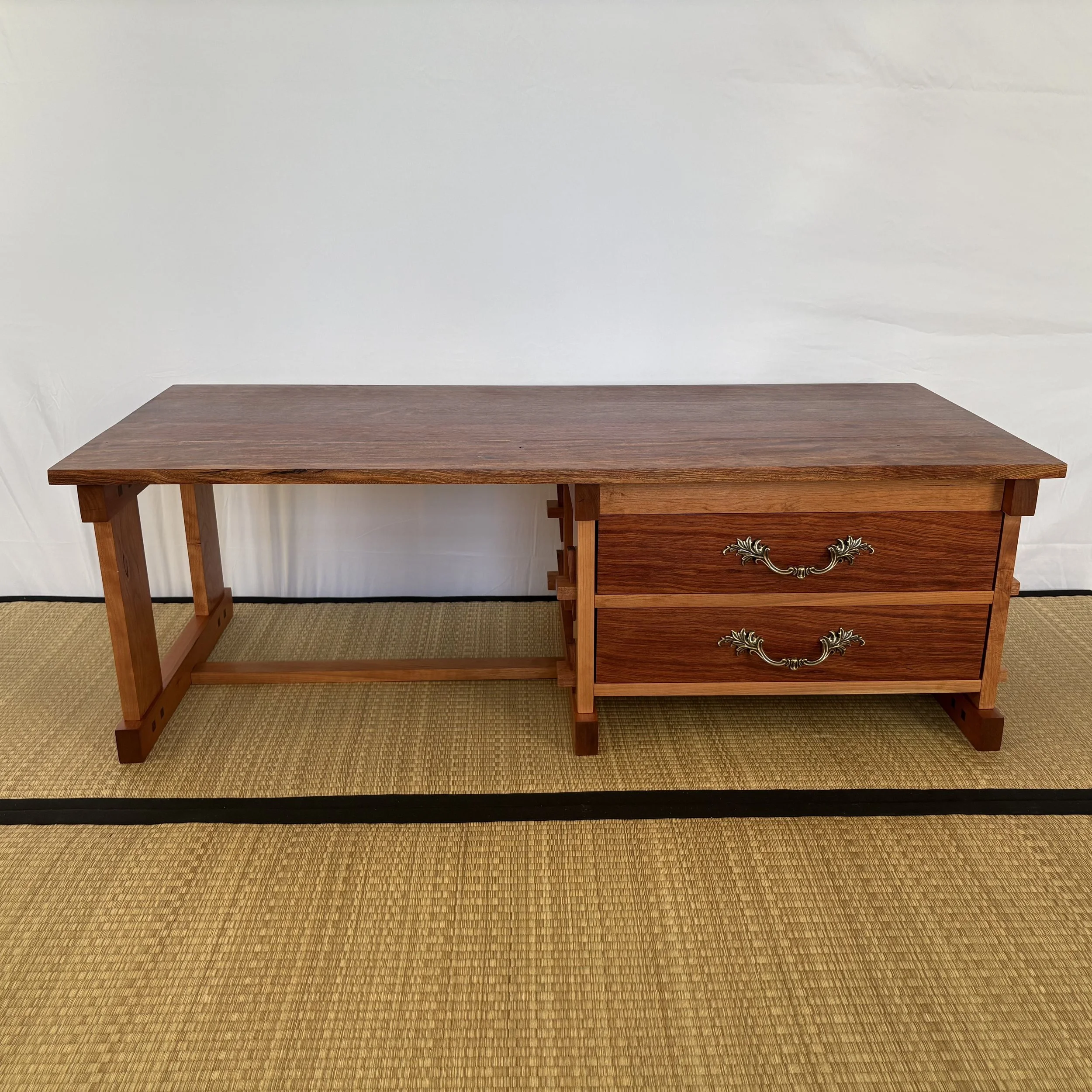 Image 1 of 11
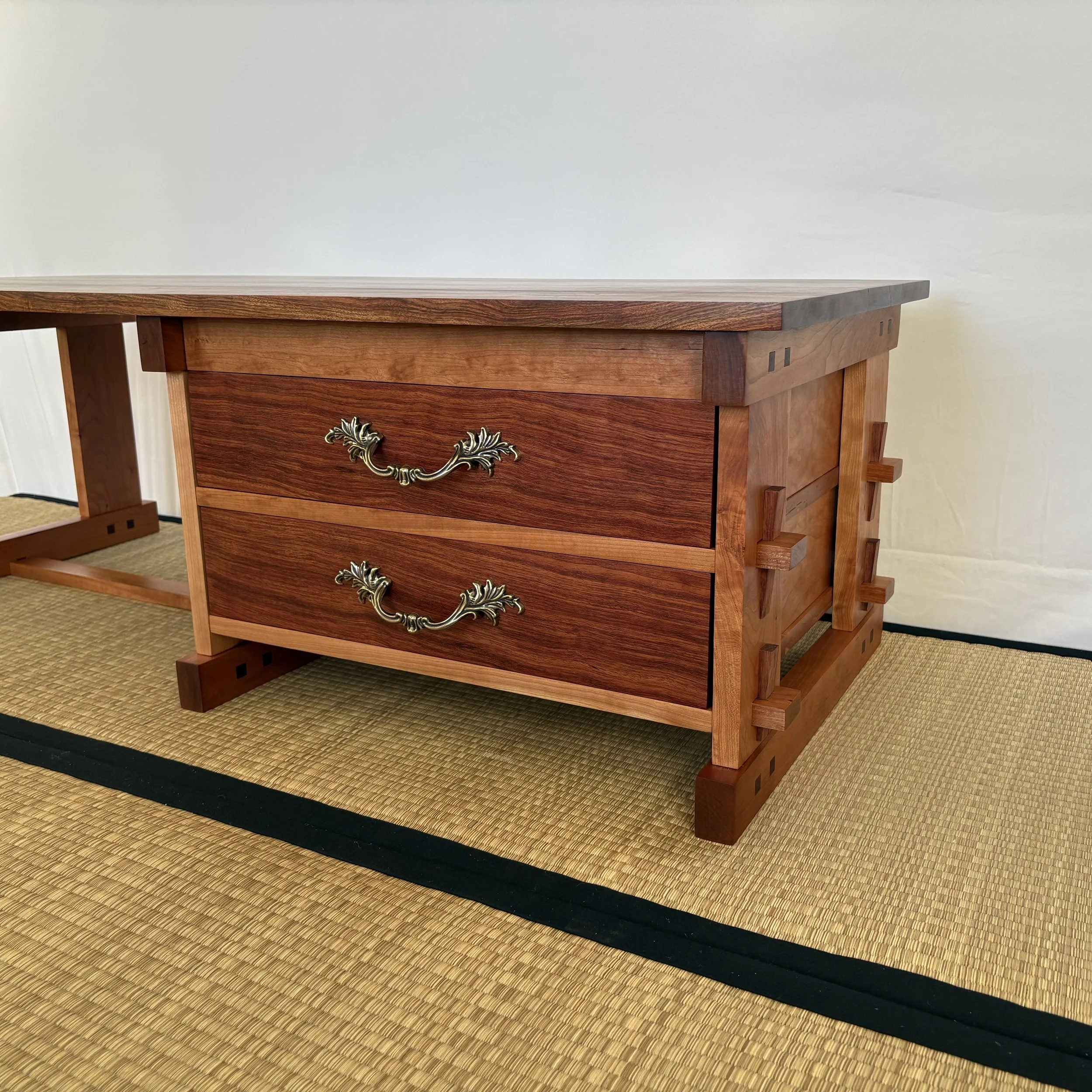 Image 2 of 11
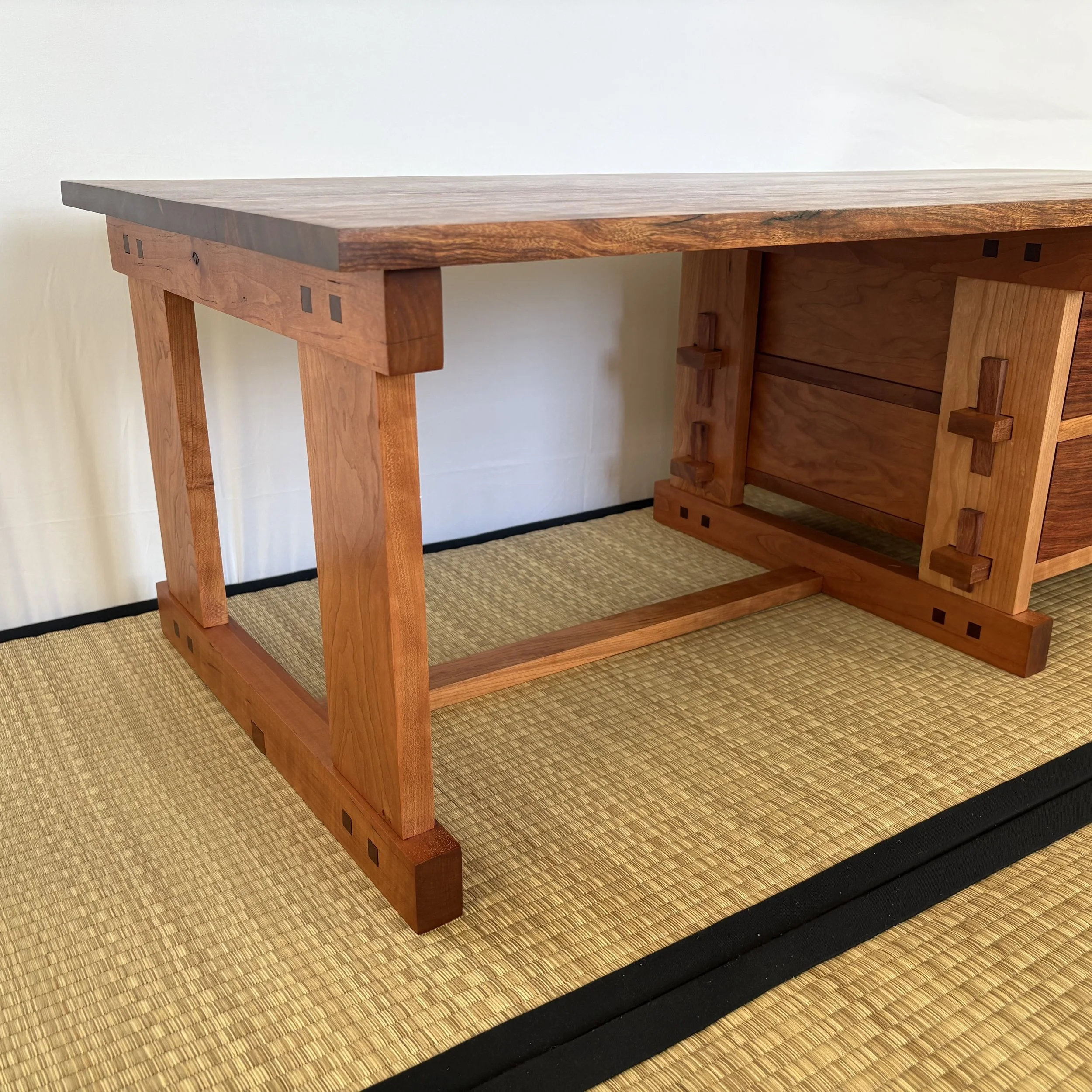 Image 3 of 11
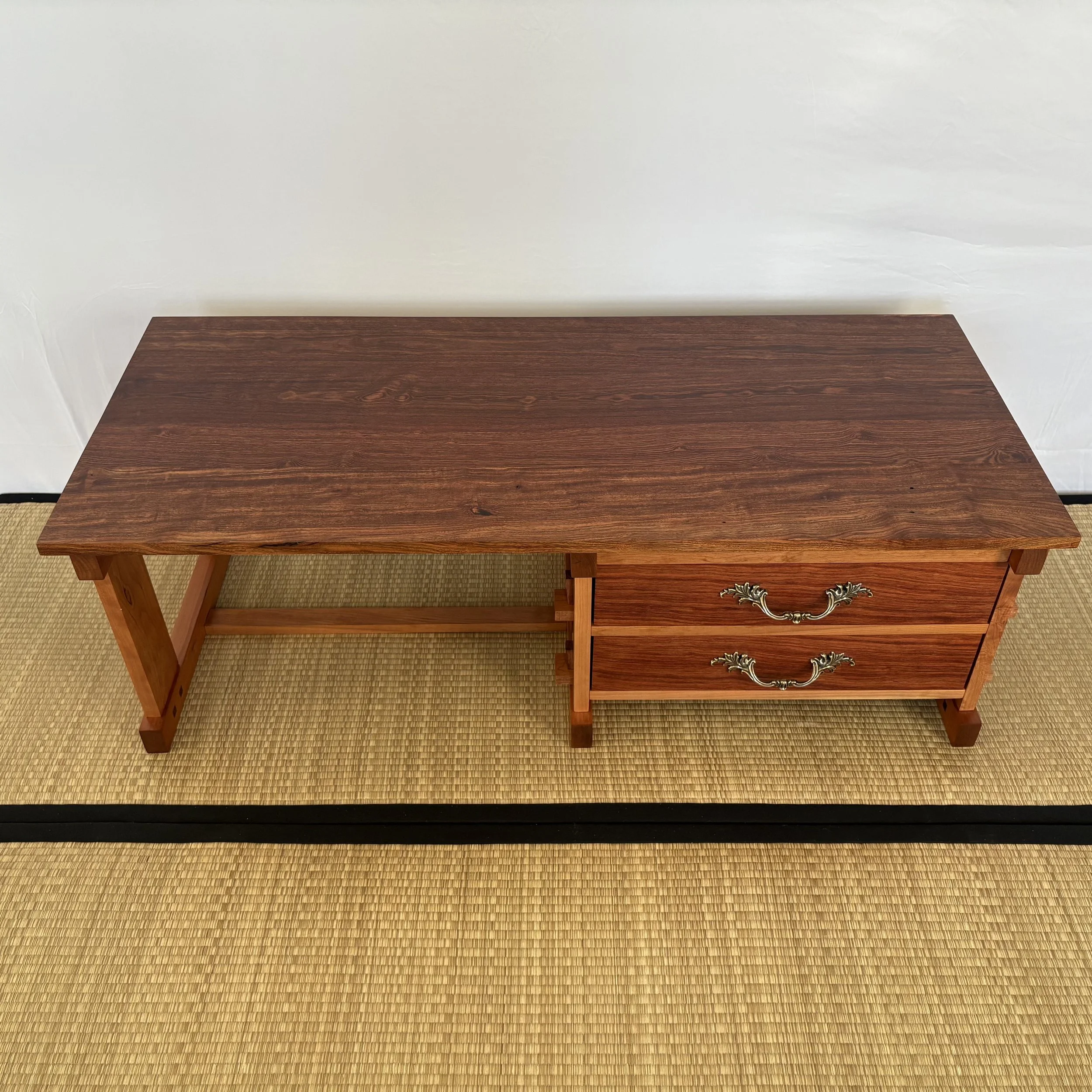 Image 4 of 11
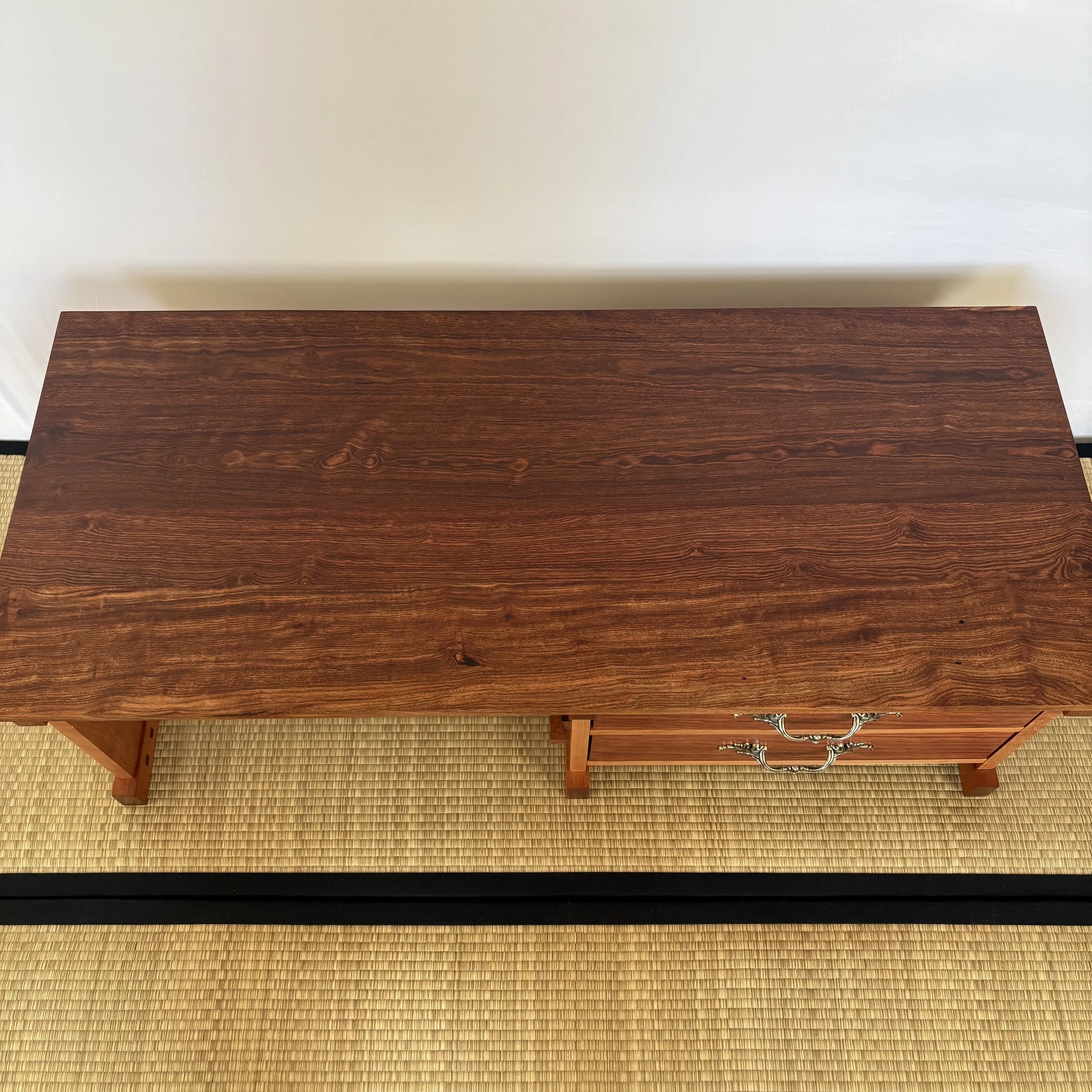 Image 5 of 11
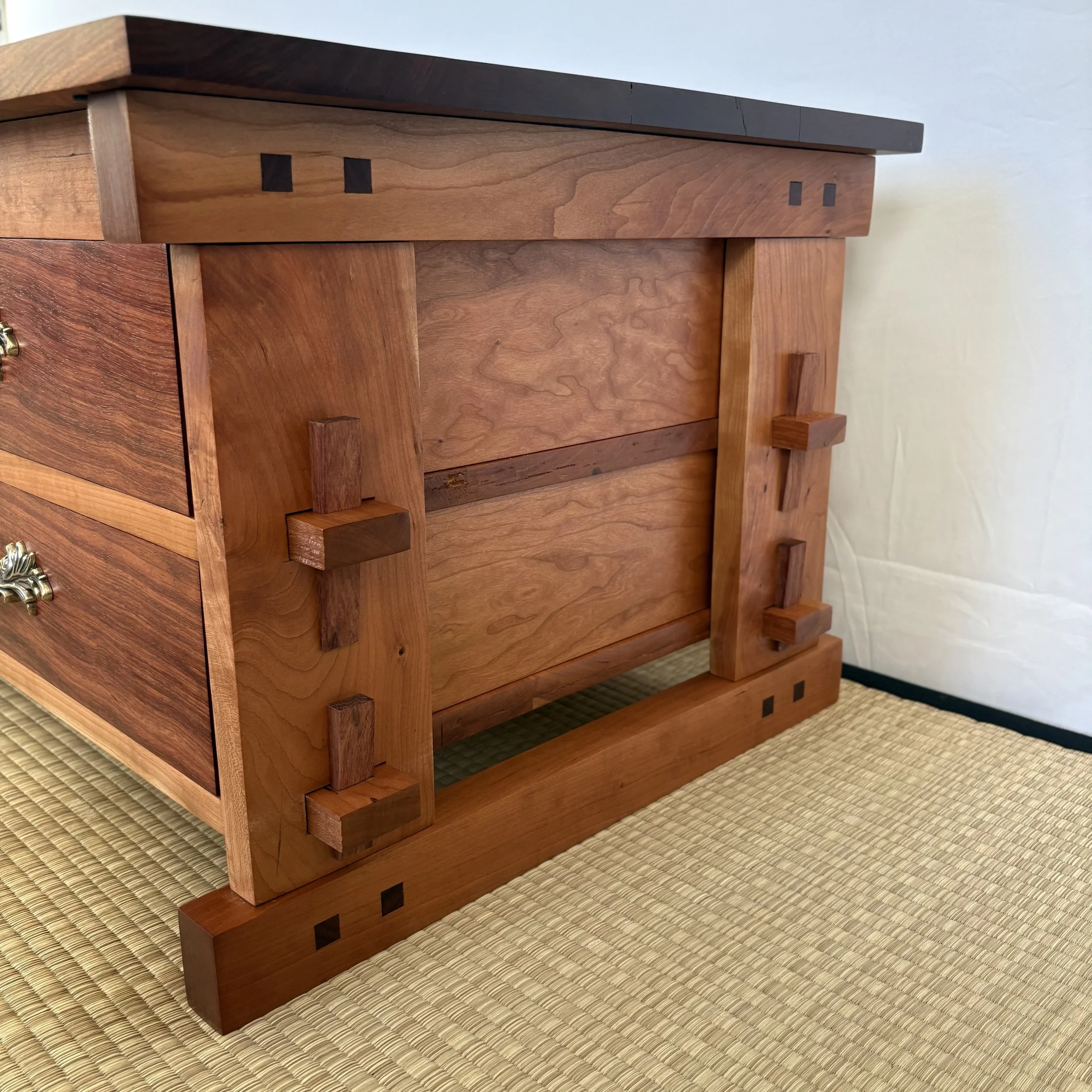 Image 6 of 11
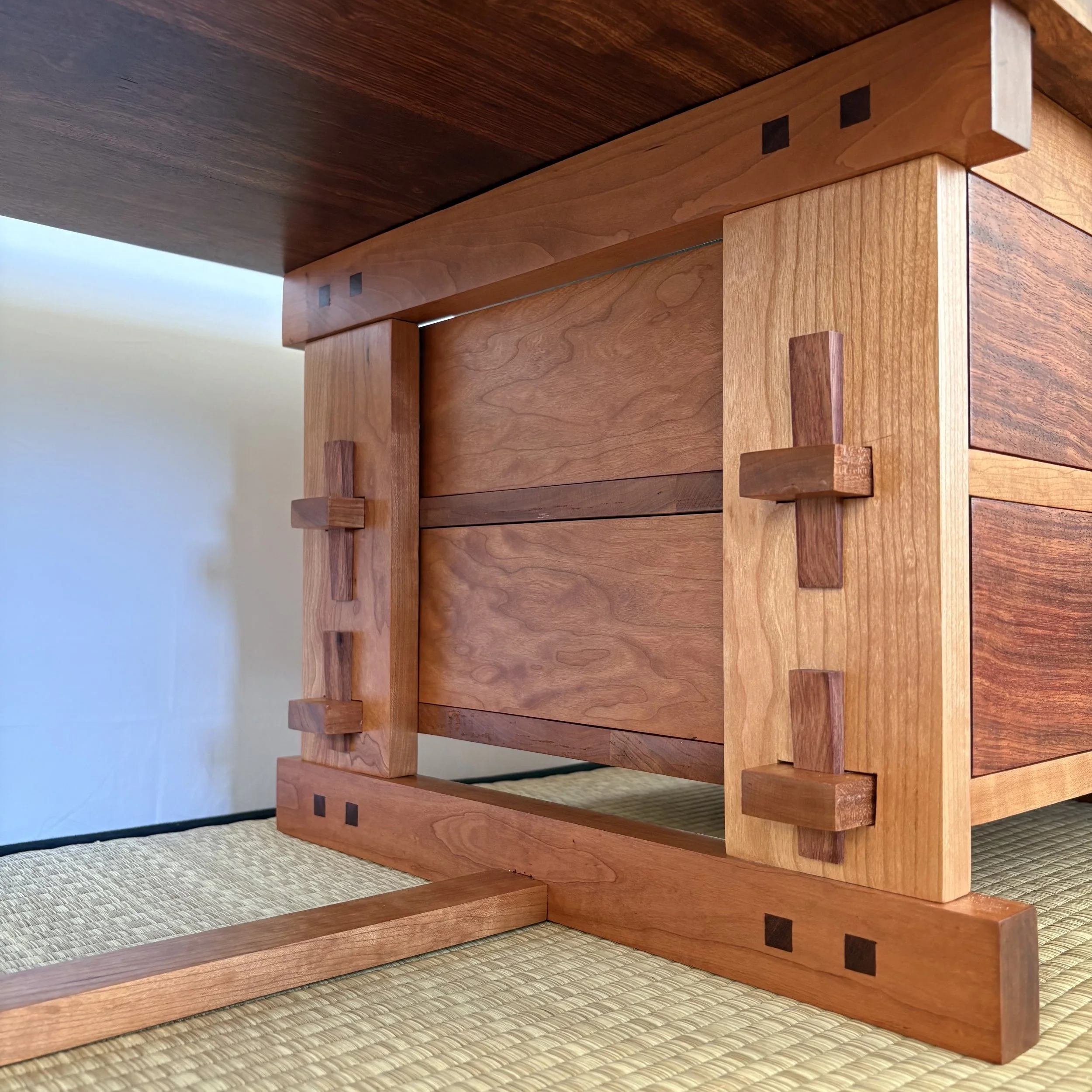 Image 7 of 11
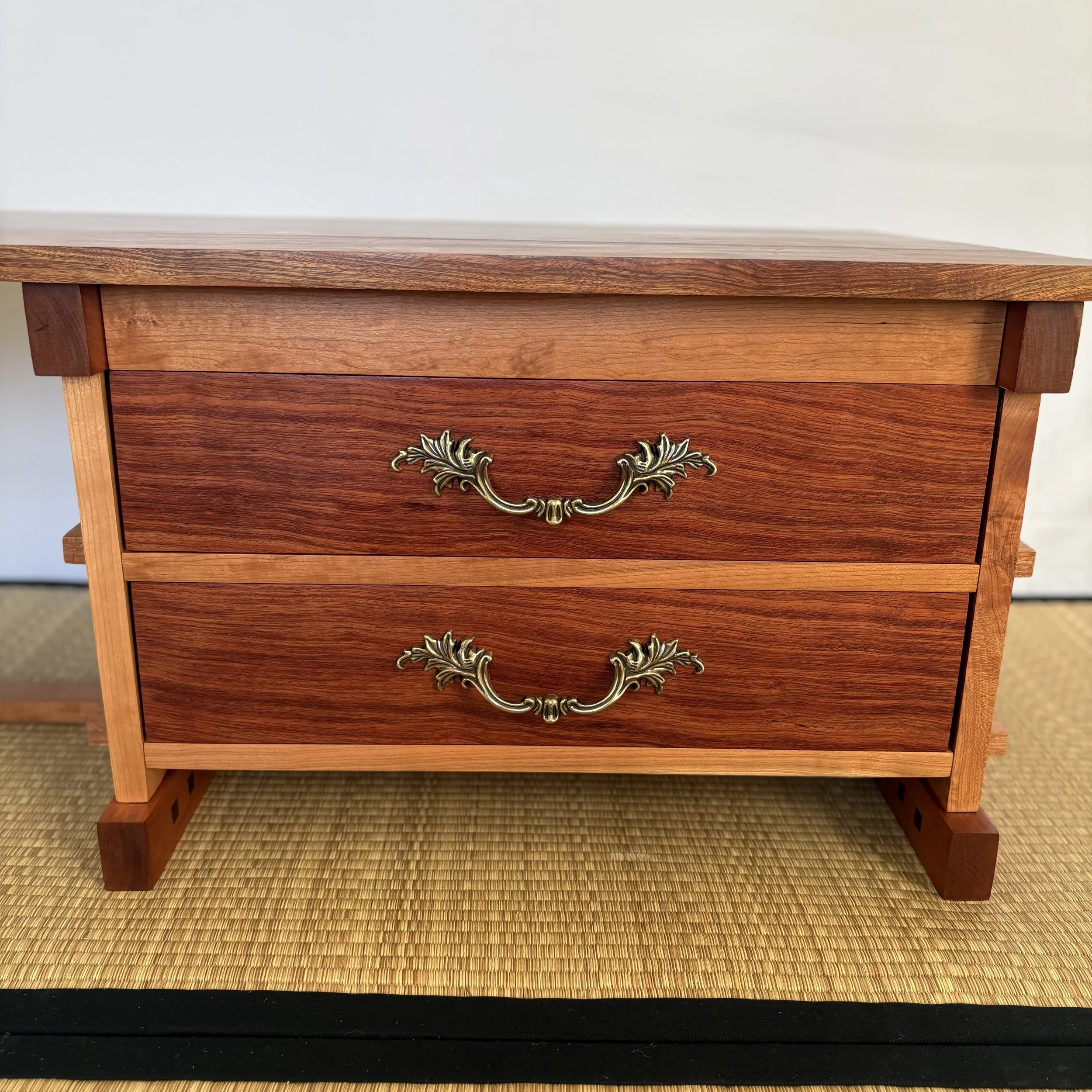 Image 8 of 11
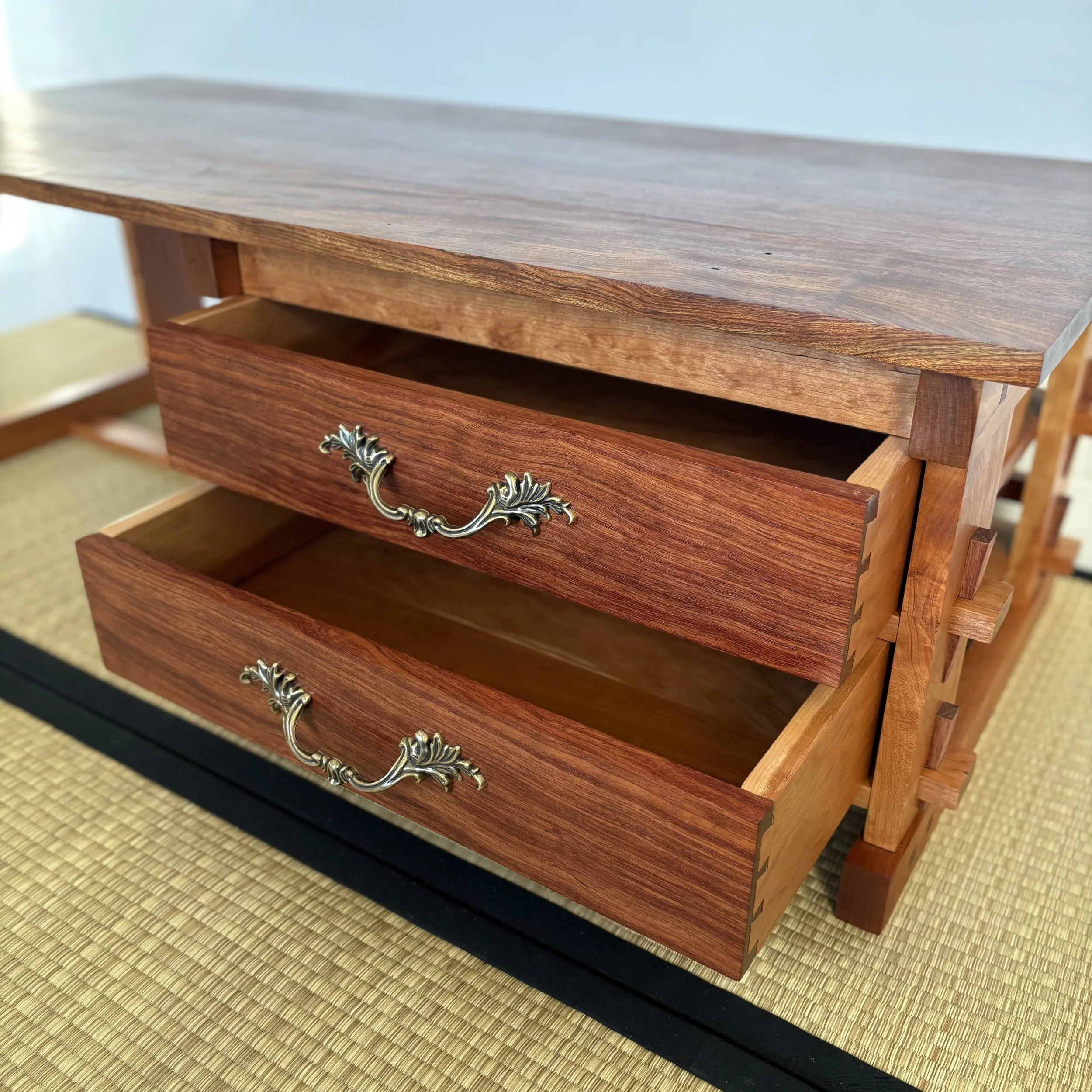 Image 9 of 11
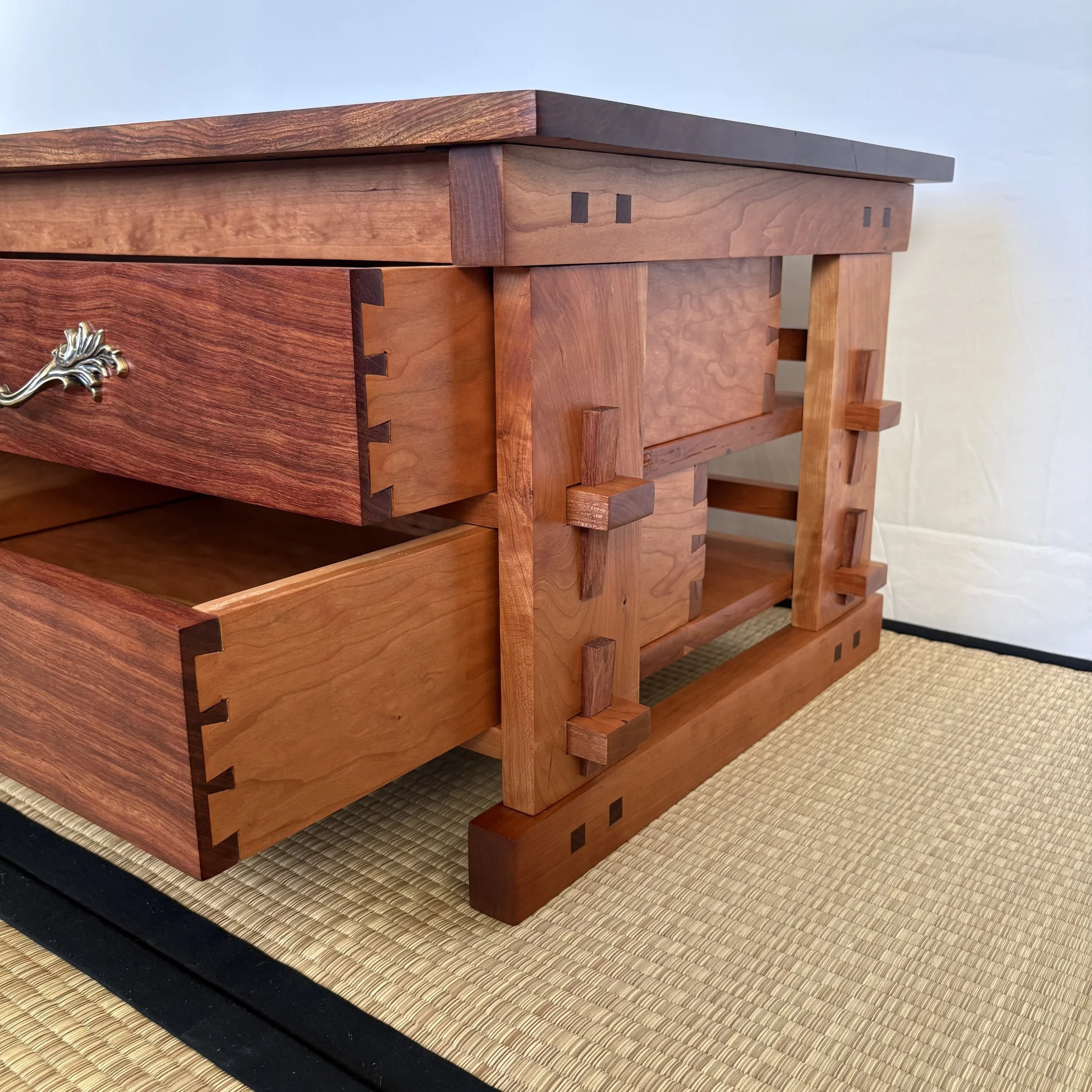 Image 10 of 11
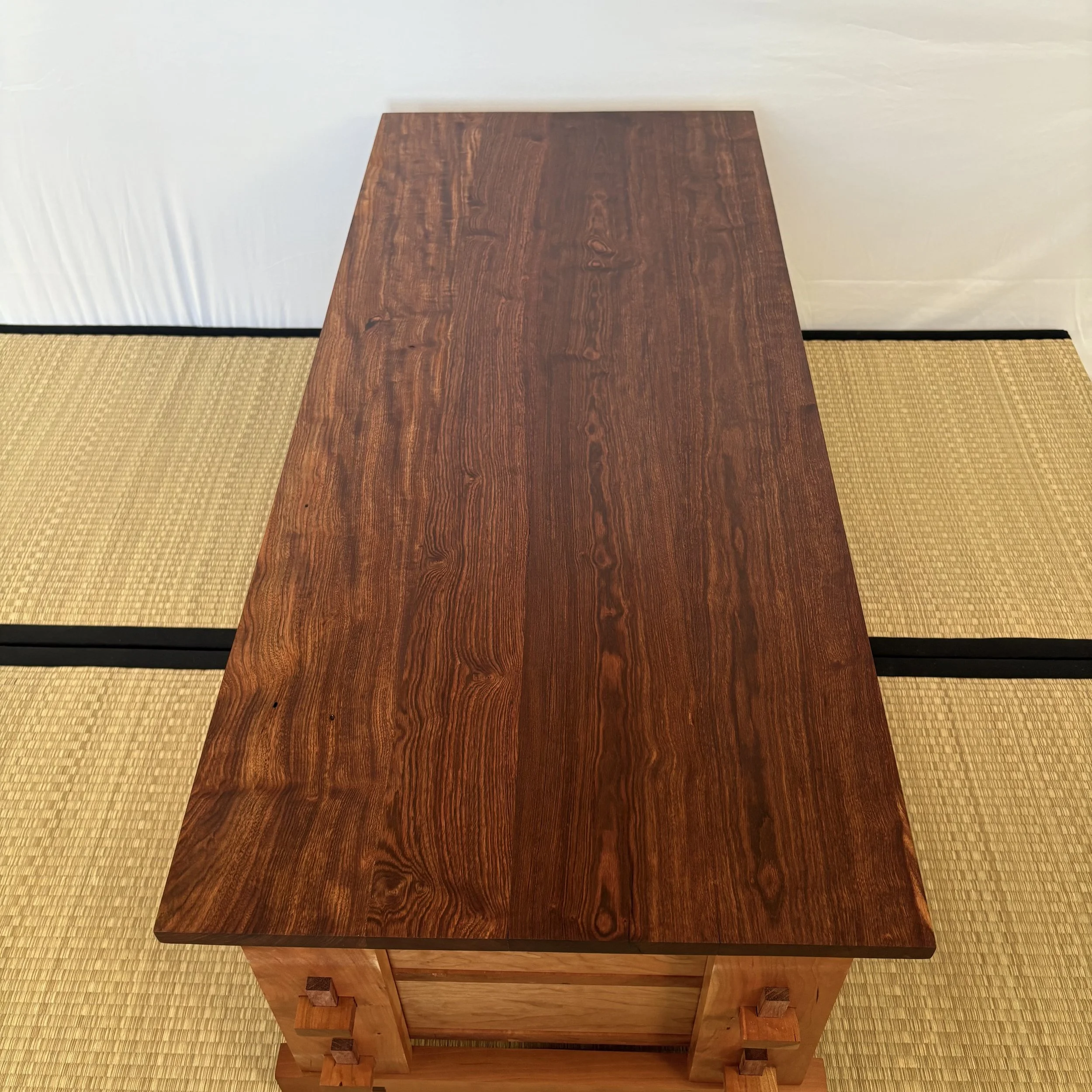 Image 11 of 11