Furniture That Doesn't Need to Shout
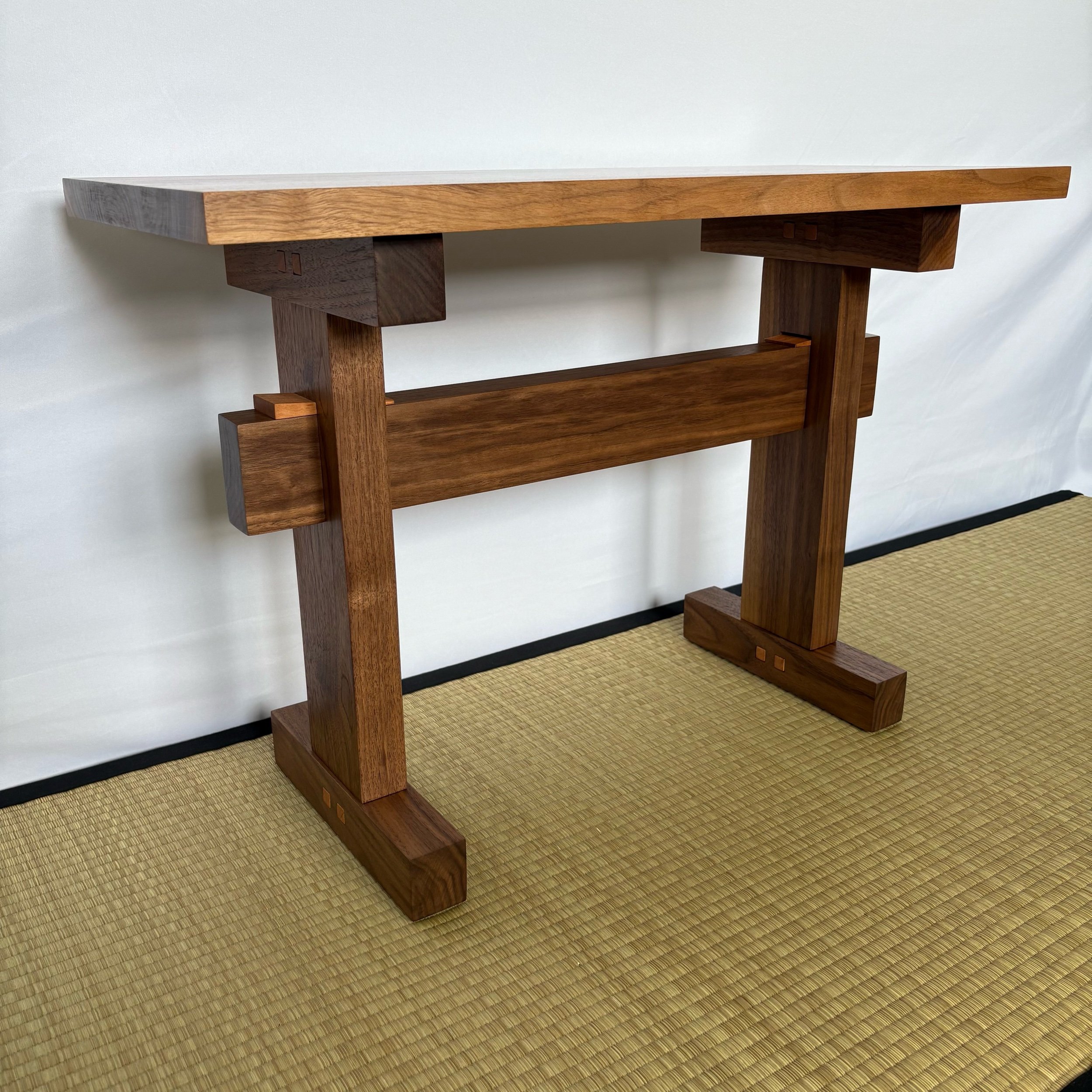
I believe that a great piece of furniture should be memorable, distinctive, and feel like it belongs where it is placed. Furniture can be expressive. It can feature dramatic hardwoods, unusual proportions, intricate joinery, and bold silhouettes. In fact, I think furniture should command attention, especially when it is something we interact with every day. But there is an important distinction between commanding attention and overwhelming a space.
Furniture is only one element of an interior. It exists alongside architecture, lighting, other furnishings, and the people who inhabit the room. No matter how beautiful a piece may be on its own, I believe it should maintain some sense of harmony with its surroundings. That is what I mean when I say that furniture doesn't need to shout.
Finding Balance Between Expression and Restraint
Some of my favorite hardwoods are anything but subtle. Leopardwood, marblewood, and heavily figured walnut can be visually dramatic. Their grain patterns are often complex, with strong contrasts and natural movement that immediately attract the eye. When working with materials like these, I often find that restraint becomes even more important.
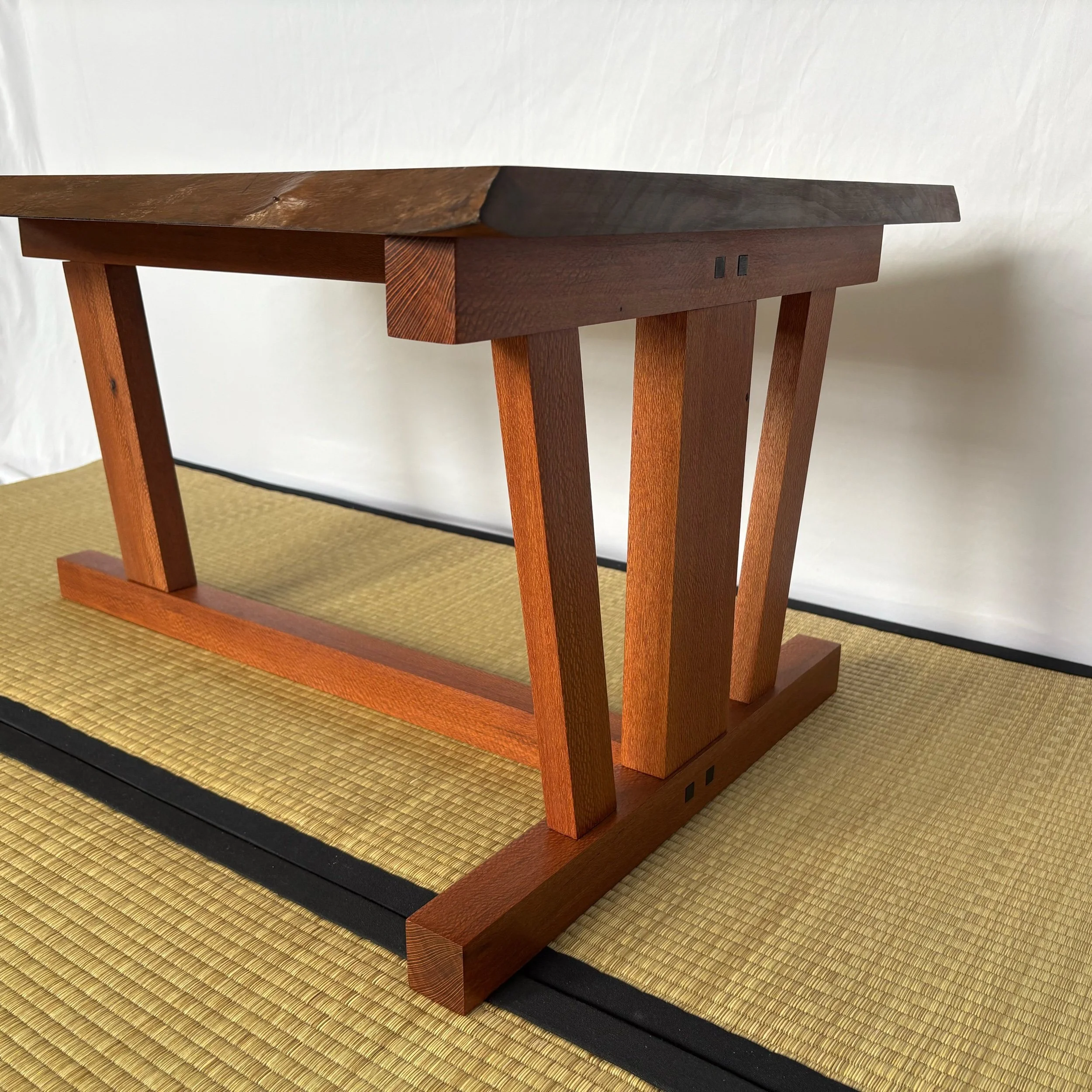
Chōwa, one of my live edge tables, is a good example. Its base is made entirely from leopardwood, an exotic hardwood with an incredibly bold grain pattern. I also incorporated Gabon ebony pegs into the joinery, introducing another contrasting material. Using leopardwood for the entire base was a daring decision. Rather than adding more complexity, I kept the silhouette relatively simple, with the structure following the natural movement of the live edge top. A single set of pegged joints provides an ornamental accent without overwhelming the composition.
The materials themselves provide much of the visual interest, so the structure doesn't need to compete with them. I think of this as a balance between expression and restraint. The bolder the materials become, the more important it can be to simplify the form around them.
The Importance of Silhouette and Empty Space
One of the most important parts of my design process is determining what doesn't need to be there. I gravitate toward clean lines, angular forms, and architectural silhouettes. I also prefer structures that feel visually light, even when the furniture itself is substantial. My bookcases, for example, have traditionally featured open backs. This allows natural light to travel through the shelves and keeps the wall behind the furniture visible. The result is a lighter composition that also makes the joinery easier to appreciate. I believe empty space can be just as important to a design as the wood surrounding it.
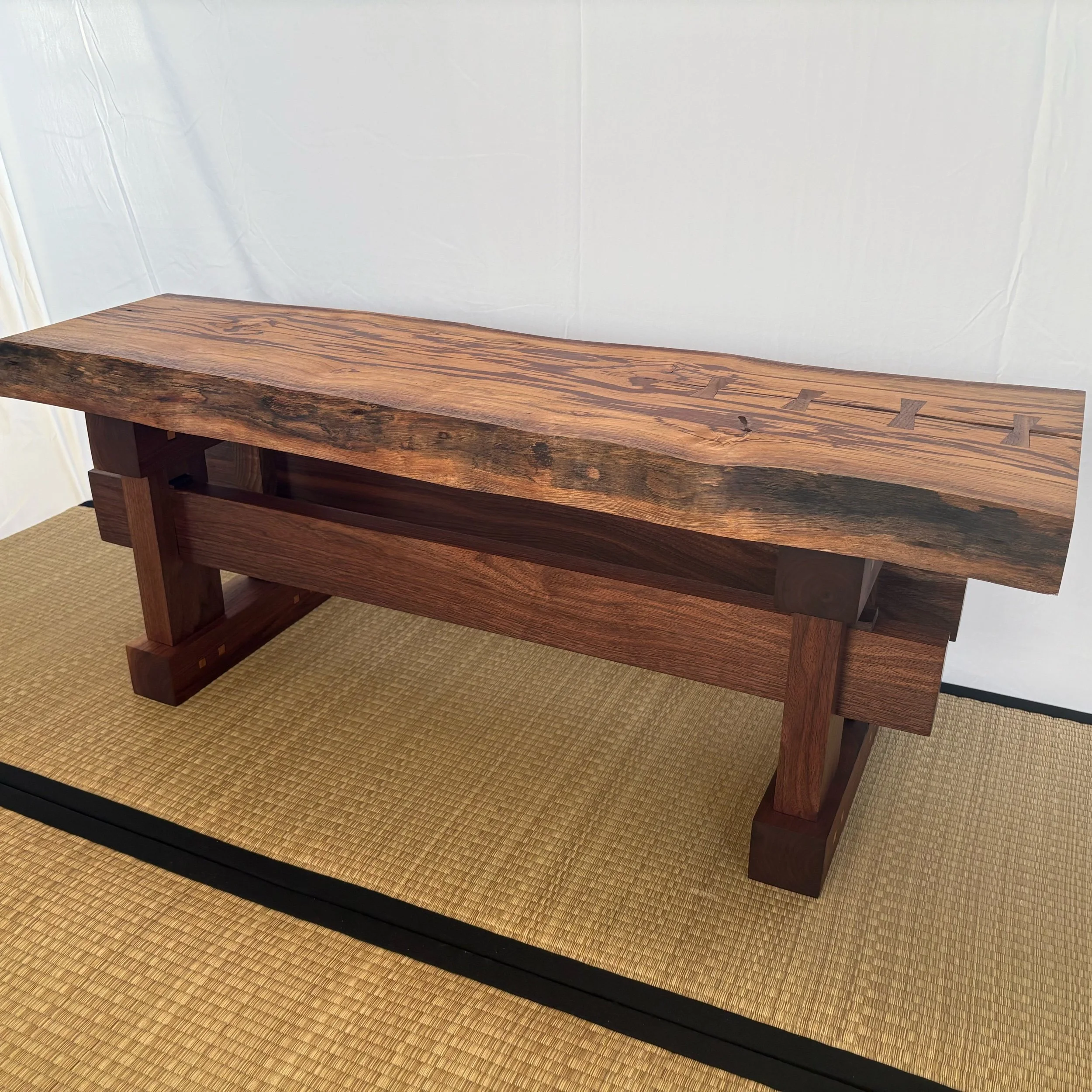
Mujō, my live edge marblewood bench, demonstrates this principle particularly well. Its thick marblewood slab is naturally commanding, with a stone-like appearance, dramatic striping, and natural imperfections repaired using butterfly keys. Beneath it sits an architectural walnut trestle base featuring exposed traditional joinery. During the early design process, I considered adding another horizontal structural element spanning across the floor between the two sides of the base. Ultimately, I decided against it.
Although I wanted the base to feel strong and grounded, I also wanted to preserve the negative space underneath the bench. Adding that extra element would have made the structure visually heavier without contributing enough to justify its presence. Sometimes, improving a design means deciding not to add something.
Construction as Ornament
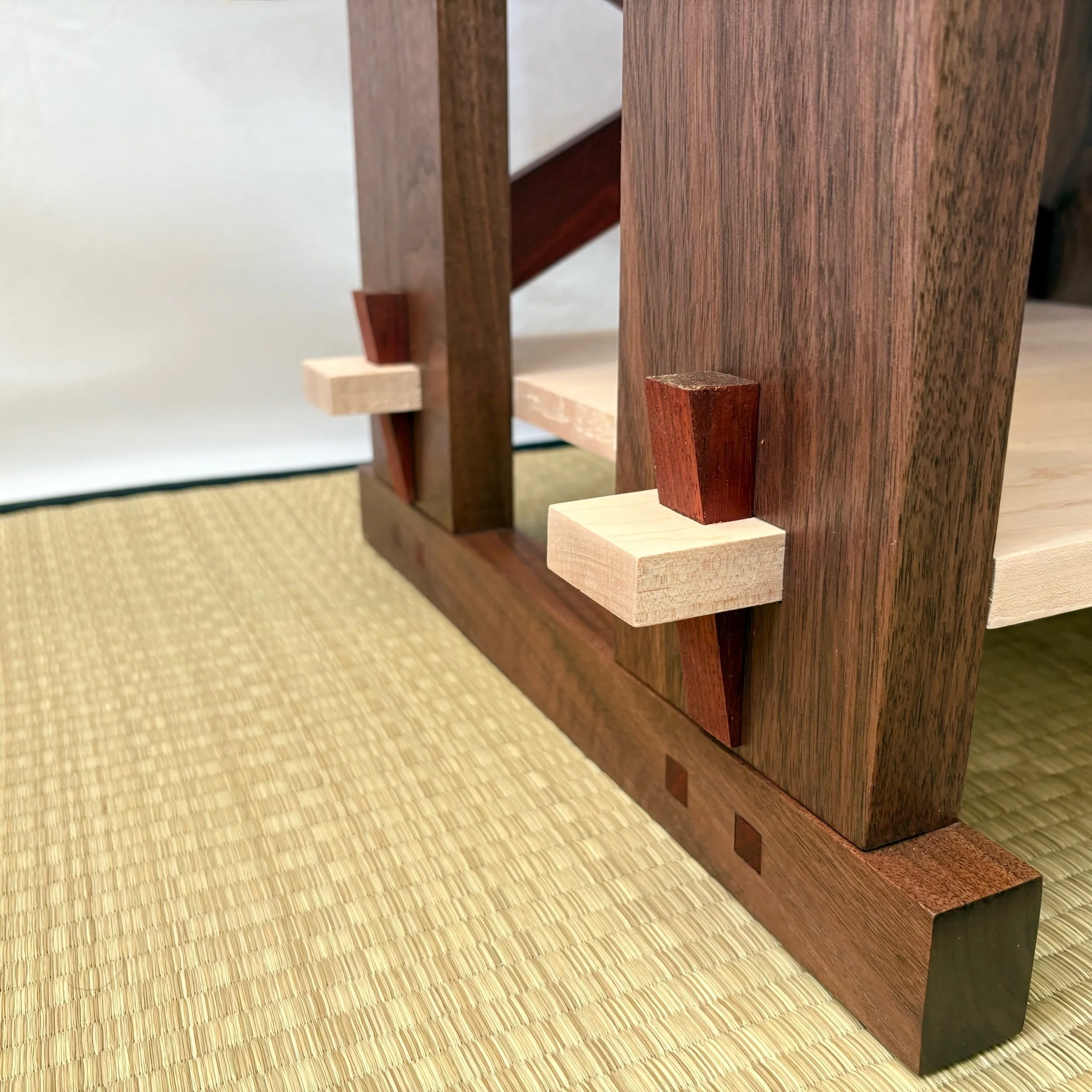
Traditional joinery is another important part of this philosophy. I have always appreciated the appearance of exposed mortise-and-tenon joints, wooden pegs, wedges, and tusk tenons. These details serve a structural purpose, but they can also be incredibly beautiful. Rather than concealing the construction, I often make it part of the design. This allows relatively simple furniture to reveal surprising complexity upon closer inspection.
From across the room, someone might initially notice the silhouette of a table or the striking grain of its hardwood. As they approach, they begin to notice the contrasting pegs, carefully fitted wedges, and the way the structural elements connect. Those smaller details give the furniture another layer of character without requiring a more complicated overall shape. I think that is one of the most rewarding aspects of working with traditional joinery. The construction itself can become ornament.
Learning From Japanese Interiors
My appreciation for restraint is also influenced by traditional Japanese architecture and furniture. What interests me particularly is the relationship between furniture and empty space. Traditional Japanese interiors often make comparatively limited use of freestanding furniture. A room might serve different purposes throughout the day, with furnishings brought out when needed rather than permanently occupying every available corner. Practical pieces such as tansu storage chests, chabudai tables, and low writing desks reflect an approach in which furniture serves a clear purpose without necessarily filling the entire room.
I find that philosophy compelling. It encourages me to question whether another shelf, brace, panel, or decorative feature is truly necessary. Just because I can add something to a design does not mean that I should. The goal isn't to eliminate expression, but to make sure that every element contributes something worthwhile.
Furniture That Rewards a Closer Look
I also believe that great furniture should remain interesting long after the excitement of seeing it for the first time has passed. A beautiful silhouette may capture someone's initial attention, but smaller details can continue to reward them over the years. A patch of figured grain might become visible in the afternoon sunlight. A subtle color variation might become more apparent as the wood ages. The surface might take on a richer tone, revealing characteristics that were less noticeable when the piece was new.
Wood is particularly well suited to this kind of lasting interest because it is not a completely static material. Its appearance changes with light, time, and use. I like the idea that someone could live with a piece of my furniture for years and still discover something they hadn't noticed before. That sense of discovery gives the furniture an enduring character beyond its initial appearance.
Finding a Place to Belong
Of course, even a restrained piece of furniture will not necessarily belong in every room. I think my work is especially well suited to interiors that already embrace natural materials such as wood and stone, along with generous natural light. Those surroundings complement the warmth and character of solid hardwood furniture. This is also one of the things I appreciate most about custom furniture. A design can be adapted to the proportions, materials, and character of a particular room until it feels almost inevitable, as though it could not belong anywhere else.
Ultimately, I don't believe memorable furniture needs to dominate its surroundings. It should have a distinct identity, invite attention, and reward closer inspection. But it should also contribute to the larger environment rather than compete against it. A great piece of furniture should be interesting enough to remember, balanced enough to live with, and harmonious enough to feel like it has always belonged.
